




KISS Brings Their Legacy Back With Futuristic Concert Plans
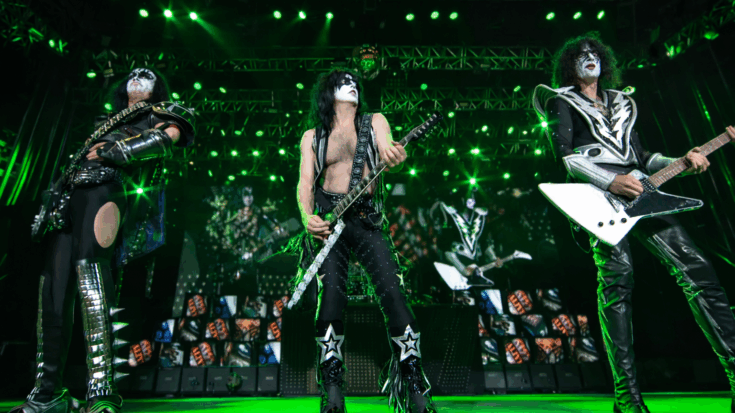
via "DEDE4EVER" / Youtube
KISS are preparing to extend their legacy into the digital realm, with bassist Gene Simmons confirming that the band has already written new material for their upcoming avatar-based production. Far from being a retrospective alone, the project signals a forward-looking evolution—one that blends nostalgia, technology, and fresh creative output.
Set to debut in Las Vegas in 2028, the immersive show builds on the virtual band concept first unveiled during Kiss’ farewell tour finale in December 2023. The production brings together Industrial Light & Magic, which is developing the digital avatars, and Pophouse Entertainment, the team behind ABBA Voyage, to execute what promises to be one of the most ambitious concert experiences yet.
A Legacy Reimagined Through Avatars
At the heart of the production are Kiss’ iconic alter egos. Simmons emphasized that the show will center on the band’s classic “face personas,” including the Demon and the Starchild, while leaving room for interpretation in how those characters are presented.
Co-founder Paul Stanley noted that fans can expect a setlist rooted in the band’s enduring catalog, alongside unexpected additions. “It will have all the classics through the years and some surprises,” Stanley said.
Simmons echoed that sentiment while hinting at new material. “You’re gonna get all that stuff, and also new songs,” he said. When pressed further, he clarified:
“Exactly what that means, written by us. We have songs done.”
Technology Meets Spectacle
According to Pophouse CEO Jessica Koravos, the avatars introduced in 2023 were merely a starting point. The current production reflects major advancements in both creative direction and technology. With a team led by Thierry Coup, development is already underway, including testing pyrotechnics against next-generation LED screens to fully realize Kiss’ signature visual intensity.
Koravos described the concept as “a crazy 4D roller coaster ride through the hits, the comic book worlds and personas of Kiss,” underscoring the show’s ambition to merge music, storytelling, and immersive design.
Stanley stressed that the project bears little resemblance to earlier hologram experiments. “This will be virtually seeing us. My avatar looks just like me, not a cartoon or an artist rendition,” he said. “The great thing about being an icon is you can stay young forever.”
Beyond a Concert: Reinventing the Band’s Future
For Simmons, the scale of the project transcends the traditional idea of a live performance. “It’ll be less of a show and more of an experience,” he explained. “As fantastic as virtual reality is—it fools your eyes—but your ears can hear what’s going on around you. So if, hypothetically, you see a dragon that breathes fire into your face, the visuals will give you that, but you won’t feel the heat, so imagine all your senses are being attacked right along with the visuals.”
Both Simmons and Stanley framed the avatar concept as a creative liberation from the physical limits that typically define rock bands. “It’s very interesting, because unlike other rock bands, we’re not confined by their limitations,” Stanley said. “We’re basically Superman with a guitar and a Marshall amplifier.”
Simmons ultimately positioned the project not as a nostalgic afterthought, but as a deliberate reinvention of what Kiss can be in a post-touring era. “The fans should start to think about this as not the end of anything,” he said. “This is the phoenix rising out of the ashes… This is not the end. This is the beginning.”
In that sense, the avatar show represents more than just a technological spectacle—it reflects a broader shift in how legacy acts sustain themselves in an increasingly digital industry. By detaching the performance from the physical constraints of age and time, Kiss are effectively redefining longevity in rock music. The band that once built its reputation on theatrical excess and larger-than-life personas now finds itself uniquely suited for a medium where those very qualities can be pushed even further.
If successful, the project could set a precedent for how veteran artists approach the future—less as a final curtain call and more as an open-ended platform for reinvention. For Kiss, a band that has always thrived on spectacle and mythmaking, the move into virtual immortality feels less like a departure and more like a natural next act.