The Songs That Defined ’80s Southern Rock

Some people think it is not necessary to call something “Southern rock.” After all, rock ’n’ roll came from the South. The blues came from the Mississippi Delta, country music came from Appalachia, and gospel music came from church pews throughout the region. Music historian Scott B. Bomar has said that rock music has always been Southern. It was there that country and blues came together and rock music was formed. In that sense, Southern rock is not a separate genre; it is part of the foundation. But toward the end of the 1960s, a distinct tone began to emerge. The Allman Brothers Band helped define a new style when they rose to prominence in 1969. Rooted in blues and country, it grew to include long guitar jams, dual lead guitars, and a gritty sense of pride. By the 1970s, bands like Lynyrd Skynyrd helped turn Southern rock into a cultural force.
By the time the 1980s arrived, the genre no longer needed to prove itself. It was already established. The challenge had shifted. Southern rock musicians were finding success on mainstream radio and even crossing over to pop and country charts. That success brought new pressure. These artists had built their reputations by resisting polish and embracing rough edges, yet now they were appearing regularly on MTV.
Southern rock songs of the 1980s had to do two things at once: stay true to their roots while reaching a wider audience. The five songs below accomplished that in different ways. Each captured a moment when Southern rock matured, expanded, and entered the mainstream without losing its identity.
“Keep Your Hands to Yourself” by the Georgia Satellites
The Georgia Satellites did not worry much about genre labels when they released “Keep Your Hands to Yourself” in 1986. They thought of themselves simply as a rock band. The guitars were loud, and the beat hit hard, but listeners heard something else, too. The vocals carried a Southern accent. The rhythm had a barroom stomp. The storytelling felt perfectly at home in a honky-tonk.
Written by lead singer Dan Baird, the song exploded in early 1987 and reached No. 2 on the Billboard Hot 100. That was an impressive achievement for a band many assumed would remain regional. The song had humor, attitude, and an instantly memorable riff. At first, the band resisted being labeled Southern rock. They appreciated country music but did not consider themselves a country band, instead viewing themselves as raw rockers. Still, comparisons were inevitable, especially as Lynyrd Skynyrd fans embraced them.
After the death of Skynyrd frontman Ronnie Van Zant in 1977, there was a noticeable void in Southern rock. Many fans longed for a band with that same untamed energy. Without intending to, the Georgia Satellites filled that space.
“Keep Your Hands to Yourself” became a staple for bar bands, and it was covered by artists like Hank Williams Jr. and the Charlie Daniels Band. Some observers noted that the song revived the excitement of classic rock while nudging country music toward louder guitars and bolder attitudes. Though often labeled a one-hit wonder, the band delivered a moment when Southern rock felt joyful, rough, and alive on every radio spin.

“Hold On Loosely” by 38 Special
38 Special was one of the most successful Southern rock bands of the 1980s with direct ties to the genre’s roots. The group was co-founded by Donnie Van Zant, the younger brother of Ronnie Van Zant, making their lineage clear.
Rather than simply copying the past, the band adapted to changing times. Their 1981 album Wild-Eyed Southern Boys demonstrated that evolution, and its standout track, “Hold On Loosely,” became their breakthrough hit. The song reached No. 27 on the Billboard Hot 100, and its video was the 13th ever played on MTV when the channel launched in 1981. Suddenly, Southern rock shared the same visual space as pop and new wave, and the experiment worked.
A surprising collaboration helped shape the song. Jim Peterik, a Chicago songwriter best known for co-writing “Eye of the Tiger,” contributed to its creation. The partnership between a Midwestern pop-rock writer and a Southern rock band produced something fresh. The result was still guitar-driven and gritty, but more polished and hook-focused. “Hold On Loosely” addressed relationships without sounding preachy. The riff was clean, the chorus was massive, and the edge remained intact.
That balance became a blueprint for Southern rock in the 1980s. The song proved that honoring tradition did not mean abandoning accessibility, and it set a high bar for the band’s future work.

“Southern Accents” by Tom Petty and the Heartbreakers
Tom Petty was born and raised in Florida and never tried to hide it. In 1985, he leaned fully into his Southern identity. “Southern Accents,” the title track from the album of the same name, explored what it meant to be Southern in contemporary America.
At the time, Petty was creatively restless and eager to push himself. The album came close to being a concept record, examining Southern identity from multiple angles. The title track was slower and more introspective than the arena-ready hits he was known for. It conveyed pride, hardship, and emotional complexity. Petty rejected simple stereotypes, portraying the South as a place of deep history, contradictions, and mythology.
Not all of the attention surrounding the album was positive. During the tour, Confederate imagery appeared in the stage design, a decision Petty later acknowledged was a mistake. His intended message about Southern heritage became entangled with symbols that carried heavier meanings. Even so, the music resonated with listeners who felt misunderstood because of where they came from. “Southern Accents” offered a more thoughtful version of Southern rock, proving it could be reflective as well as raucous.

“Gimme All Your Lovin’” by ZZ Top
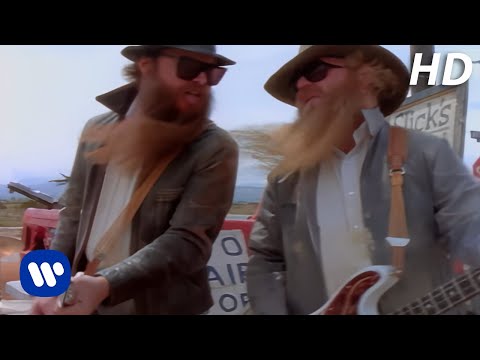
With their long beards and Texas swagger, ZZ Top looked like they had stepped straight out of a dusty roadside bar. In the 1980s, however, they reinvented themselves. The release of Eliminator in 1983 marked a turning point, and “Gimme All Your Lovin’” became a massive hit.
While the song performed well on the Billboard Hot 100, its true explosion came on MTV. Drummer Frank Beard reportedly recognized the power of the new channel and encouraged the band to embrace music videos. The gamble paid off. Videos for “Gimme All Your Lovin’,” “Legs,” and “Sharp Dressed Man” created a stylized world audiences loved.
The videos featured glamorous women in a red hot rod rescuing awkward men from dull lives, with ZZ Top acting as musical fairy godfathers. The presentation was flashy, humorous, and unforgettable. Musically, the song blended blues-based rock with slick 1980s production and touches of synthesizer. Some longtime fans were initially shocked, but the transformation propelled ZZ Top from regional heroes to global stars.
The song demonstrated that Southern rock could evolve with the times without losing its edge. The attitude remained, even as the spotlight grew brighter.
“All My Rowdy Friends Are Coming Over Tonight” by Hank Williams Jr.
Hank Williams Jr. was technically a country artist, and as the son of Hank Williams Sr., he grew up in the shadow of a legend. By the 1980s, however, he had carved out his own identity by blending country music with outlaw bravado and Southern rock intensity. Released in 1984, “All My Rowdy Friends Are Coming Over Tonight” reached No. 10 on Billboard’s Hot Country Songs chart and became a full-blown party anthem.
The music video amplified that spirit. It featured appearances by George Jones, Willie Nelson, Waylon Jennings, Kris Kristofferson, members of the Oak Ridge Boys, and even Cheech and Chong. The result felt like a massive Southern gathering.
The video became the first country music video to win the CMA Music Video of the Year award and was among the earliest country clips to receive heavy rotation on MTV. When the song was later adapted as the theme for Monday Night Football, its popularity soared even higher. Millions of viewers sang along each week. The song blurred the line between country and Southern rock, combining twang, electric guitars, and unfiltered energy. It showed that Southern rock did not belong to just one chart or one audience.

By the 1980s, Southern rock had matured. It was no longer simply a rebellious regional sound seeking validation. It had become a force with national and global reach.
These five songs illustrate how the genre evolved. Some leaned toward pop hooks, some embraced MTV visuals, and others wrestled with the meaning of Southern identity. All of them preserved the core blend of blues, country, and rock. In the 1980s, Southern rock was not about asking permission. It was about claiming space on radio, television, and arena stages. The accents were still there. The guitars were still loud. And now, the whole world was listening.