


The Bizarre Reason Led Zeppelin Were Denied Entry to Singapore
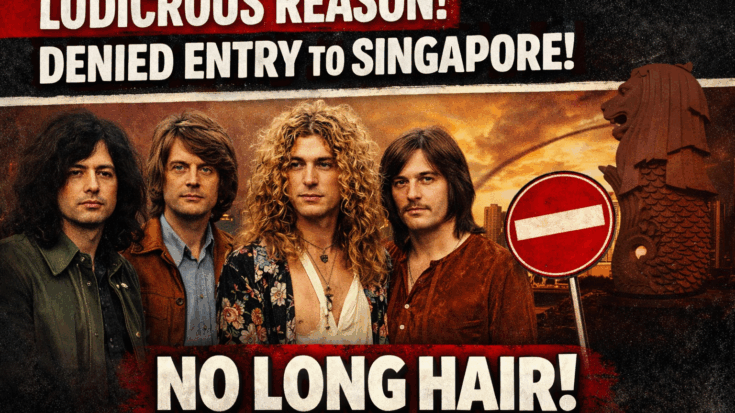
By the early 1970s, rock music had evolved from a teenage disturbance into a fully formed cultural force. Born in the 1950s and hardened through the upheavals of the ’60s, it attracted artists who treated rebellion not as a side effect, but as a mission statement. Each new decade seemed to deliver another generation of musicians accused of corrupting youth and challenging authority.
In 1972, Led Zeppelin were no longer provocateurs on the fringe. They were at the absolute height of their power. With three albums already behind them and both critics and fans firmly on their side, the band appeared unstoppable. Led Zeppelin IV raced to the top of the UK charts, and “Stairway to Heaven” became a fixture on radio playlists, its slow-burn grandeur echoing across the world.
At that point, it seemed reasonable to assume that every city, every country, and every major venue would welcome them. That assumption proved wrong.
Turned Away at the Border
Led Zeppelin were scheduled to perform at an outdoor venue in Singapore on February 14, 1972. Traveling by private jet, Robert Plant, Jimmy Page, John Bonham, and John Paul Jones arrived expecting a routine, VIP-style entry. Instead, they were stopped almost immediately by border officials and denied entry into the country.
The refusal was so complete that the band barely made it past the aircraft door. As Stephen Davis wrote in Hammer of the Gods: The Led Zeppelin Saga:
“Not only were Led Zeppelin not allowed into the country, they were even refused permission to get off their plane and had to fly back to London.”
Rumors quickly followed. Some speculated that Singapore had reacted to the band’s reputation for excess, chaos, and offstage debauchery. Others pointed to Jimmy Page’s well-known interest in the occult. The truth, however, was far less sensational.
The Politics of Long Hair
Led Zeppelin were denied entry for one simple reason: their hair.
In the early 1970s, Singapore was a newly independent nation determined to protect social order and economic stability. Government officials were deeply wary of the countercultural movements sweeping through the West, where rock music often symbolized defiance, anti-authoritarianism, and rejection of traditional values.
As part of a broader campaign against what it labeled Western “drug culture,” Singapore targeted the visual markers of the hippie era. Long hair, especially on men, became a political issue. Visitors with hair below the shoulders were frequently turned away at the border. Some were allowed entry only if they agreed to get a haircut immediately; others chose to leave rather than comply.
The policy may seem extreme in retrospect, but Singapore’s priorities at the time were clear. The government sought to build a disciplined, patriotic, and highly productive society. Conformity, education, and national loyalty were seen as essential tools in shaping a successful post-colonial state.
By that standard, Led Zeppelin represented everything Singapore wished to keep at bay. They were not the only casualties of the policy—Cliff Richard was also denied entry in 1972 for sporting collar-length curls.
Decades later, attitudes softened and the rules relaxed. Yet the irony remains striking: it was not until 2013 that Robert Plant, still wearing his famously flowing hair, finally performed on Singaporean soil for the first time.