




The Beatles Song Mick Jagger Didn’t Like
via "The Beatles" / Youtube
In hindsight, the much-mythologized rivalry between The Beatles and The Rolling Stones feels less like a bitter feud and more like a cultural contrast that defined an era. While the two bands occasionally exchanged jabs in the press, their broader ambition aligned: to push the British Invasion into global prominence.
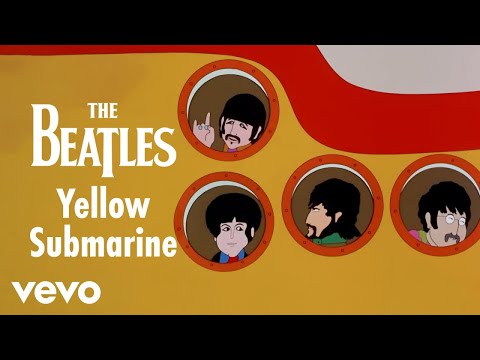
There was even collaboration beneath the surface. The Beatles famously handed the Stones one of their earliest hits, “I Wanna Be Your Man,” underscoring a mutual respect that coexisted with their differences. Still, those differences became increasingly pronounced—particularly in their artistic sensibilities. Mick Jagger, for instance, held firm standards as a songwriter and found some of the Beatles’ more whimsical material less convincing. Songs like “Yellow Submarine,” with their playful tone, struck him as overly light, even trivial.
Whimsy and Grit: Two Artistic Philosophies
The divide between the bands was rooted in approach. The Beatles, led by John Lennon and Paul McCartney, demonstrated a remarkable ability to move between experimentation and accessibility. Their catalog embraced imagination, character-driven storytelling, and moments of pure whimsy. Even when McCartney occasionally overindulged that instinct—as heard in “Maxwell’s Silver Hammer”—the band’s lighter work often resonated, from “Being for the Benefit of Mr. Kite!” to “Hello, Goodbye.”
By contrast, the Stones cultivated a far grittier identity. Even their attempts at more ornate, baroque-inspired sounds on albums like Between the Buttons carried an underlying toughness. They were not a band naturally inclined toward playfulness; rather, they projected a sense of danger and realism that set them apart. Where the Beatles leaned into fantasy, the Stones remained grounded in a more hard-edged version of reality.
This philosophical split made songs like “Yellow Submarine” emblematic. Recorded during the Beatles’ Revolver era, the track paired psychedelic textures with a childlike sensibility, delivered perfectly by Ringo Starr. His unpolished voice added to the song’s charm, turning simplicity into strength.
Yet not everyone in the Stones’ orbit was convinced. As Marianne Faithfull later wrote in her memoir Memories, Dreams and Reflections, Jagger’s reaction to such songs was dismissive:
“He’d never put their music down. Well, of ‘Yellow Submarine’ or those whimsical Beatle songs, he might say, ‘Now that is a bit silly.’ I never thought so; I loved it, still do. Also, something like ‘With a Little Help from My Friends,’ but these are obviously not the sort of things the Stones would be into.”
Diverging Paths: From Influence to Identity
As both bands moved deeper into their careers, the contrast sharpened. Early on, the Stones often mirrored the Beatles’ innovations, albeit with a rougher, more dangerous edge. But by the latter half of their classic period, they had fully carved out their own identity.
The Beatles continued to explore emotional breadth, capable of delivering lush ballads like “The Long and Winding Road” alongside their more experimental work. The Stones, however, leaned further into intensity and attitude. Jagger focused on songs such as “Sympathy for the Devil” and “Bitch,” embracing themes that were darker and more confrontational.
Even when addressing love, the difference remained stark. The Beatles often framed it with warmth and optimism, while the Stones gravitated toward its more painful dimensions. Tracks like “Wild Horses” revealed Jagger’s affinity for heartbreak and emotional grit over sentimentality.
Ultimately, the contrast defined both bands as much as their music did. The Beatles thrived on versatility, unafraid to be whimsical, theatrical, or tender. The Rolling Stones, meanwhile, built their legacy on toughness and authenticity. For them, music was never about lighthearted escapism—it was about attitude, edge, and a refusal to soften their image for mass appeal.