




The Debate About John Lennon’s Solo Music
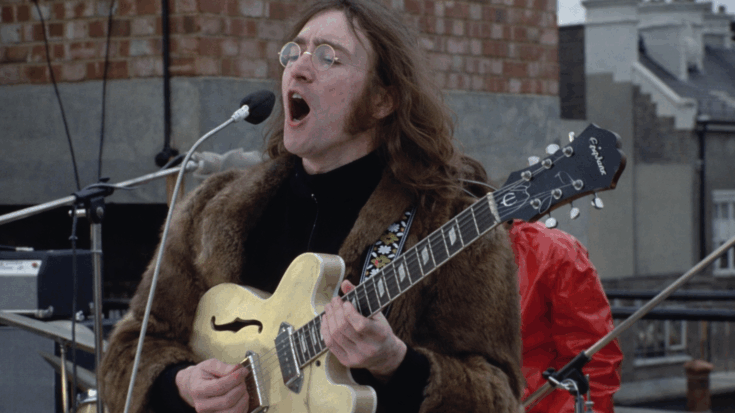
via "The Beatles" / Youtube
For decades, the breakup of The Beatles has been attributed to a familiar mix of causes: drugs, personal tensions, and the relentless pressure of global fame. While all of these played a role, the most compelling explanation lies in the group’s widening creative divide—particularly between John Lennon and Paul McCartney.
A revealing clue emerged when Lennon pointed to “Help!” as one of his favorite songs he wrote for the band. On the surface, the track fits neatly within the group’s early pop formula. Beneath it, however, was something far more personal. At a time when Beatlemania demanded endless songs about love and adoration, Lennon began to reject what he saw as empty sentimentality. Influenced by the introspective songwriting of Bob Dylan, he sought to inject real meaning into his work—and believed “Help!” achieved that.
“I meant it, it’s real. The lyric is as good now as it was then, it’s no different, you know,” Lennon said. “It was just me singing ‘help’, and I meant it, you know. I don’t like the recording that much, the song I like.”
He later admitted, “We did it too fast to try and be commercial.”
Image, Expectation, and the Cost of Compromise
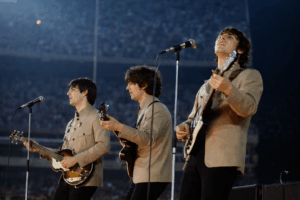
In their early years, The Beatles were not just musicians—they were a carefully managed cultural phenomenon. From matching suits to media-friendly personas, their image was meticulously constructed to appeal to the widest possible audience. According to Lennon, that polish came at a price.
“We weren’t as open and as truthful when we didn’t have the power to be,” he said. “We had to take it easy. We had to shorten our hair to leave Liverpool. We had to wear suits to get on TV. We had to compromise.”
This tension between authenticity and accessibility became a defining fault line within the band. McCartney thrived within the structure of melodic, universally appealing songwriting, while Lennon increasingly resisted it. What began as a subtle philosophical difference eventually hardened into a creative standoff—one that would become impossible to ignore in the group’s later years.
Rebellion in the Studio and a Divided Future
By the late 1960s, Lennon’s frustration had evolved into open defiance. His approach to music grew more experimental, sometimes at odds with the band’s identity. During the recording of McCartney’s “Ob-La-Di, Ob-La-Da,” engineer Richard Lush recalled a chaotic session in which Lennon, reportedly under the influence, stormed in and took control:
“John Lennon came to the session really stoned, totally out of it on something or other… [He] went straight to the piano and smashed the keys with an almighty amount of volume, twice the speed of how they’d done it before, and said, ‘This is it! Come on!’ He was really aggravated.”
At the same time, Lennon was pushing boundaries with pieces like “Revolution 9,” a sound collage that rejected conventional song structure altogether. It was less a bid for commercial success than a declaration of artistic independence—a signal that he was no longer willing to operate within the confines that had once defined the band.
After the breakup, Lennon fully embraced that independence. Working solo and with the Plastic Ono Band, he pursued stark, unfiltered expression. Tracks like “Imagine,” “Working Class Hero,” and “Mother” revealed an artist unconcerned with mass appeal, instead prioritizing emotional honesty and political commentary.
Yet this freedom produced a complex legacy. While some listeners praised the rawness of his work, others found it lacking the melodic sophistication that defined his collaborations with McCartney. Meanwhile, both McCartney—through his solo career and with Wings—and George Harrison, whose solo output and work with the Traveling Wilburys were widely celebrated, achieved a level of consistency that often eclipsed Lennon’s post-Beatles catalog.
Criticism also followed Lennon’s lyrical themes. “Imagine,” for instance, remains both revered and contested. Some hail it as a universal anthem for peace, while others question the contradictions between its message and Lennon’s own lifestyle. The band Steely Dan echoed this skepticism with the line:
“Oh world become one, of salad and sun, only a fool would say that.”
Still, reducing Lennon’s solo career to inconsistency misses a larger point. His work was never designed to compete on the same terms as his former bandmates. Where McCartney and Harrison refined melody and structure, Lennon dismantled them, searching for something more immediate and confrontational. His music did not always land cleanly—but it was rarely indifferent.
In that sense, Lennon’s post-Beatles output stands less as a decline and more as a deliberate shift in artistic values. He traded polish for provocation, and accessibility for honesty. And while that choice may have divided audiences, it ensured that his voice—fractured, challenging, and unmistakably personal—remained as vital as ever.