




KISS Reveal the Real Story Behind Who Wrote “Beth”
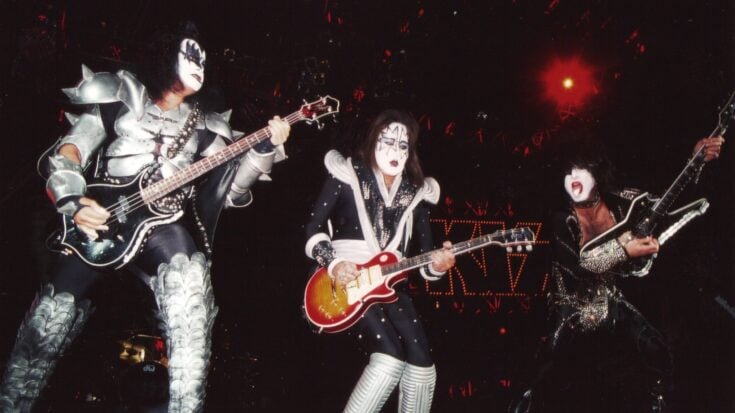
Photo by Jamiecat*, CC BY 2.0, via Wikimedia Commons
Gene Simmons has pushed back against what he calls the long-standing “mythology” surrounding Kiss’s biggest hit, “Beth,” insisting that drummer Peter Criss played no role in writing the song, even though he sang it and received a songwriting credit.
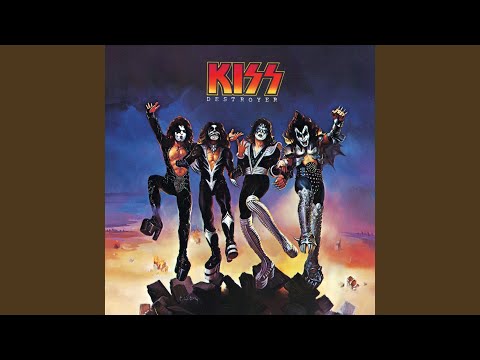
Speaking in a new interview with Professor of Rock, Simmons revisited the origins of “Beth,” which appeared on Kiss’ 1976 album Destroyer and became the band’s highest-charting single, reaching No. 7 on the Billboard Hot 100.
A Song That Started Under a Different Name
According to Simmons, the song first surfaced while he and Criss were riding in a limousine in Michigan. Criss hummed an early, rough version of the tune, which at the time carried the working title “Beck.” Simmons said the melody caught his attention and prompted him to suggest that Criss play it for producer Bob Ezrin.
Simmons also recalled advising Criss to change the title. He felt “Beck” sounded too abrupt and interrupted the flow of the melody, whereas “Beth,” he said, felt smoother and more romantic.
Simmons’ Claim: Criss Wasn’t a Songwriter
Simmons went on to explain why he believes Criss should not be considered a true co-writer of “Beth.” While emphasizing that Criss remains “family,” Simmons said it was time to clarify the record.
He argued that Criss did not write songs or play melodic instruments, asserting that drums are percussive rather than musical in a compositional sense. Simmons claimed that while drum parts are important, they cannot be copyrighted in the same way as melodies, riffs, or lyrics. He also stated that, to his knowledge, Criss did not play keyboards or stringed instruments, though he acknowledged Criss’ distinctive vocal style in the band’s early years.
The Song’s Actual Writer, According to Simmons
Simmons said the real songwriter behind “Beth,” as well as “Baby Driver,” was Stan Penridge, a musician who previously played with Criss in a group called Chelsea. That band even released a record, Simmons noted.
He alleged that Penridge ultimately agreed to share songwriting credit with Criss due to behind-the-scenes discussions, though Simmons said he was not present for those conversations. As a result, Criss’ name appears first in the credits. Simmons maintained that Criss’ only involvement in “Beth” was performing the vocals.
Beatles Influence and the Final Touches
Simmons also addressed how the song’s famous string arrangement came to be. He credited producer Bob Ezrin with suggesting an approach inspired by the Beatles’ “Yesterday,” opting for a softer arrangement built around piano and strings rather than a full rock band.
Ezrin, Simmons said, also contributed the song’s middle piano section, which he described as being adapted legally from a Mozart piano concerto in the public domain.
Simmons concluded by reiterating that much of the lore surrounding “Beth” is exaggerated. In his view, the song’s success came down to timing, Penridge’s songwriting, and Ezrin’s production choices, with Criss benefiting from being in the right place at the right time — and delivering the vocal that ultimately made the song famous.