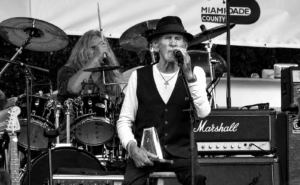





John Hammond, Grammy-Winning Blues Guitarist Who Carried Tradition Into the Modern Era, Dies at 83

Society of Rock
John Hammond, the blues singer and guitarist also known as John P. Hammond and John Hammond Jr., died on Feb. 28, 2026, at the age of 83. His passing was confirmed by musician Paul James, a longtime collaborator and close friend, who shared on Facebook that Hammond’s wife, Marla, delivered the news. The cause and place of death have not been disclosed.
For more than six decades, Hammond remained a steady voice for traditional blues music. Known for his raw guitar style and deep respect for earlier artists, he helped introduce classic blues sounds to new audiences while staying true to their roots.
A Life Shaped by Music and Early Influences
Born John Paul Hammond on November 13, 1942, in New York City, he was the son of Jemison McBride and legendary Columbia Records producer John Henry Hammond Jr. Although his father played a major role in discovering artists such as Benny Goodman, Count Basie, Billie Holiday, Bob Dylan, Bruce Springsteen, Aretha Franklin, and Stevie Ray Vaughan, the younger Hammond grew up largely apart from him after his parents divorced.
Hammond discovered the guitar during high school and quickly became drawn to acoustic blues. After leaving Antioch College in Ohio, he turned professional and signed with Vanguard Records in 1963. His debut album focused on interpretations of songs by Muddy Waters, Lightnin’ Hopkins, Robert Johnson, and Chuck Berry’s “Maybellene,” signaling his commitment to honoring earlier blues traditions.
A Career Built on Collaboration and Tradition
Over the years, Hammond released more than 30 albums, most centered on acoustic blues. He often performed with a National Reso-Phonic guitar, though he also explored electric sounds beginning in the mid-1960s. His 1965 album So Many Roads featured guitarist Mike Bloomfield along with Robbie Robertson, Garth Hudson, and Levon Helm, musicians who would soon form The Band.
During this period, Hammond developed friendships and musical connections with several influential artists. He worked with Duane Allman, Eric Clapton, and Jimi Hendrix, who briefly played in Hammond’s band before gaining worldwide recognition. In 1973, Hammond collaborated with Bloomfield and Dr. John on the album Triumvirate, further expanding his musical reach while staying grounded in blues traditions.
Recognition, Later Work, and Lasting Influence
Hammond’s dedication earned industry recognition throughout his career. He won a Grammy Award in 1985 for his performance on the compilation album Blues Explosion and received several additional nominations. He also earned eight Blues Music Awards along with ten more nominations, reflecting consistent respect from fellow musicians and critics.
One notable departure came with 2001’s Wicked Grin, an album made up largely of Tom Waits covers. The project showed Hammond’s ability to reinterpret modern songwriting through a blues lens while maintaining his distinct style. Even late in his career, he continued performing and recording, keeping traditional blues visible in contemporary music spaces.
Tributes followed quickly after news of his death. George Thorogood wrote: “For more than 50 years, John Hammond, Jr. was an icon, a professional role model and, most importantly, a friend. While we mourn his passing, we celebrate what the man and his music meant to us, and to so many.”