





Fans Finally Gave Metallica’s Early Albums the Bass They Were Missing
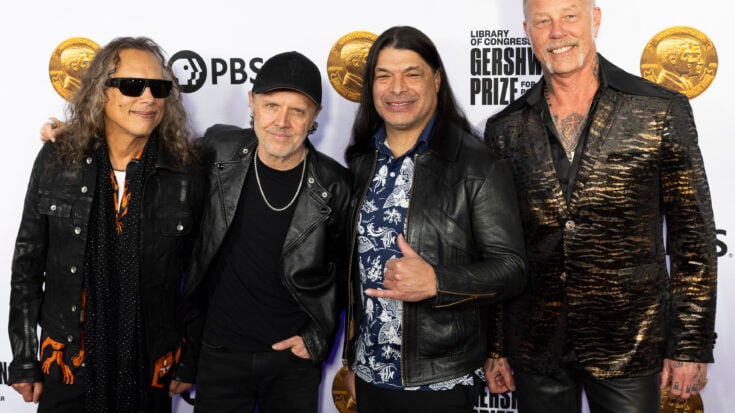
Photo by Library of Congress Life, CC0, via Wikimedia Commons
In 2013, a YouTube user known as Josh10177 took it upon himself to address what many fans regard as one of heavy metal’s most infamous production flaws: the near absence of Jason Newsted’s bass on Metallica’s 1988 album …And Justice for All. His project, aptly titled …And Justice for Jason, reintroduced the missing low end using multitrack stems sourced from rhythm games like Rock Band and Guitar Hero.
With isolated tracks available for songs such as “Blackened,” “One,” and “Dyers Eve,” Josh10177 was able to rebalance the mix, giving Newsted’s buried performance a long-overdue spotlight. What began as a fan experiment quickly evolved into a cult-favorite reinterpretation, sparking renewed debate about the album’s original production choices.
That movement didn’t stop there. Years later, YouTubers EchoBass2 and irushforth expanded on the concept, attempting to “re-remaster” Metallica’s early catalog with bass restored and emphasized. Their work reflects a broader desire among fans to hear the band’s foundational years with greater sonic clarity—and perhaps, greater fairness.
Newsted’s Frustration and the Weight of Silence
For Jason Newsted, the issue has never been merely technical—it has always been deeply personal. Reflecting on the album years later, he did not hide his disappointment.
“I can’t explain how much grief I dealt with – and still deal with – over that record,” he told Guitar World in 2009.
Recorded between January and May 1988 at One on One Studios in Los Angeles, the album marked Newsted’s first full-length effort with the band following the death of Cliff Burton. Yet instead of serving as a triumphant introduction, it became a source of lingering frustration.
“I was so in the dirt,” he admitted. “I was so disappointed when I heard the final mix. I basically blocked it out, like people do with shit.”
In other interviews, his anger was even more explicit:
“I was fucking livid! Are you kidding me? I was ready [to go] for throats, man!”
Newsted’s reaction underscores the emotional toll of being creatively sidelined, especially in a band operating at the height of its ambition. His bass lines—complex, aggressive, and tightly interwoven with the band’s evolving sound—were effectively erased from the final product, leaving both musician and fans questioning what had been lost.
Conflicting Accounts Behind the Mix
The reasons behind the album’s thin low end remain a subject of debate. James Hetfield has offered a technical explanation, pointing to overlapping frequencies and stylistic choices:
“The bass was obscured for two reasons. First, Jason tended to double my rhythm guitar parts, so it was hard to tell where my guitar started and his bass left off. Also, my tone on Justice was very scooped—all lows and highs, with very little midrange. When my rhythm parts were placed in the mix, my guitar sound ate up all the lower frequencies. Jason and I were always battling for the same space in the mix.”
However, mixing engineer Steve Thompson has presented a more direct account, attributing the decision to drummer Lars Ulrich:
“He goes, ‘See the bass guitar?’ And I said, Yeah, great part, man. He killed it. He said, ‘I want you to bring down the bass where you can barely audibly hear it in the mix.’ I said, You’re kidding, right? He said, ‘No, bring it down.’ … He says, Now drop it down another 5 dB… It just blew me away.”
Ulrich, for his part, has denied any deliberate intent to diminish Newsted’s role:
“It wasn’t [a case of], ‘Fuck this guy – let’s turn his bass down.’ It was more like, we’re mixing, so let’s pat ourselves on the back and turn the rhythms and the drums up. But we basically kept turning everything else up until the bass disappeared. It was me and James running everything with an iron fist.”
Producer Flemming Rasmussen also expressed disbelief upon hearing the final version:
“When Lars came and played …And Justice for All for me, I just looked at him and said, What’s that? … He said, ‘That’s the mix.’ I said, No, it’s not. You forgot the bass.”
Restoring Legacy—and Rewriting It
For irushforth, the modern restoration efforts are about more than correcting a mix—they are about reclaiming a narrative.
“I think what my American collaborator and I have done is the closest anyone has got to restoring Jason’s original basslines for the whole album,” he said. “I think it also helps to debunk the myth that Jason just followed James’s guitar parts… his parts were much more interesting and varied.”
These projects challenge long-held assumptions about Newsted’s role in the band, offering a version of …And Justice for All that feels fuller, more balanced, and arguably closer to the band’s true intent in the studio.
While Cliff Burton’s bass work on earlier albums was more audible, irushforth noted it wasn’t always given the prominence it deserved either. It wasn’t until the arrival of producer Bob Rock—and the band’s shift in philosophy on the self-titled “Black Album”—that bass truly found a consistent and commanding place in Metallica’s sound.
But the enduring fascination with …And Justice for All suggests something deeper than a simple mixing flaw. It represents a moment where artistic control, internal dynamics, and technical decisions collided—leaving behind an album that is both a masterpiece and a mystery.
Today, thanks to fan-driven restorations, listeners are no longer limited to one version of that story. Instead, they can hear the record as it was—and as it might have been—inviting a reevaluation not just of Jason Newsted’s contributions, but of Metallica’s legacy itself.







.jpg)