




This Guitar Riff From 1967 Widely Credited With Changing Rock Music
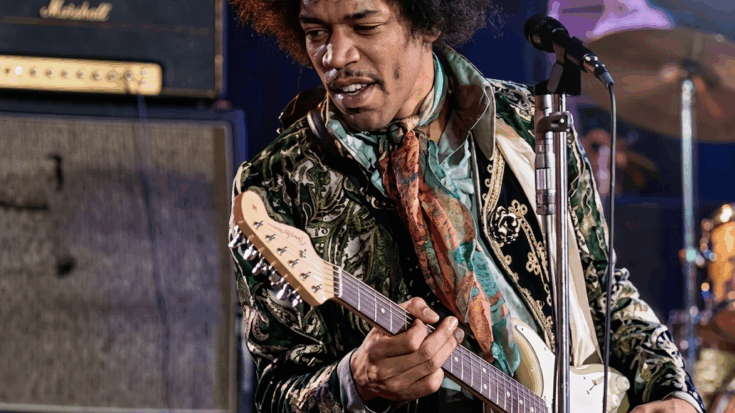
via Beat-Club / YouTube (Screen capture of live performance enhanced and colorized)
Before the spotlight ever found him, Jimi Hendrix was already building a sound that felt different from what audiences expected. He didn’t rely on formal training. Instead, he spent long hours figuring things out on his own, shaping his playing through repetition and instinct rather than rules.
His early years were spent behind other artists, not in front of them. He played as a supporting guitarist for several well-known acts, gaining steady experience on stage while quietly refining his own approach. Those performances gave him freedom to experiment without pressure, allowing his style to grow in unexpected ways.
Breaking Away From the Usual
When Hendrix finally stepped into the spotlight, his music carried a raw and unusual edge. He didn’t treat the guitar as something clean or predictable. Instead, he leaned into distortion, feedback, and sharp tonal shifts that gave his sound a restless energy.
That shift became impossible to ignore with the arrival of “Purple Haze,” released in 1967 on Are You Experienced. The track opens with a striking riff that feels immediate and unpolished, setting the tone within seconds. Rather than following familiar patterns, the song moves in a way that feels loose yet controlled at the same time.
The recording itself reflects that same mindset. Hendrix used tools like a Fuzz Face pedal, layered distortion, and feedback to create a dense, almost swirling sound. Notes bend and stretch in ways that feel unpredictable, giving the track a restless character that stands apart from typical recordings of the time.

A Defining Moment on Record
“Purple Haze” quickly gained attention after its release, reaching No. 3 on the U.K. charts. It introduced The Jimi Hendrix Experience to a wider audience and marked a turning point in his career. Listeners were drawn to the intensity of the sound as much as the structure of the song itself.
Hendrix once shared a simple wish for how people should approach his work: “When I die, I want people to just play my music, go wild and freak out, do anything they want to do.” That idea reflected how he viewed music—not as something fixed, but as something open and alive.
Over time, “Purple Haze” has remained one of the most recognized tracks tied to his name. Its opening riff still feels immediate, and the recording continues to stand out for its raw energy and unusual construction.