




When Slash Didn’t Believe These Bands Would Make It
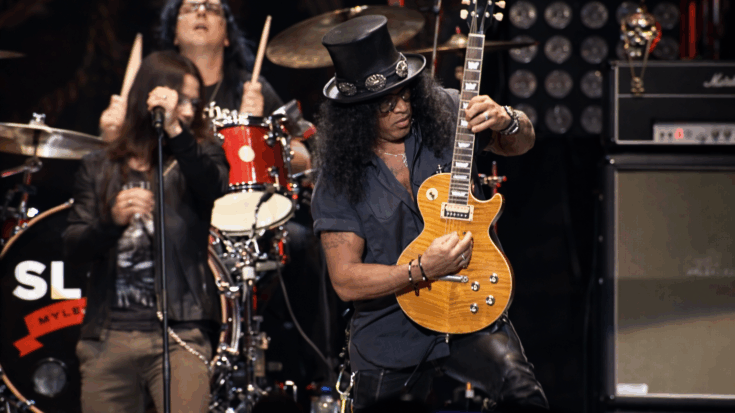
via "Inside The Music" / Youtube
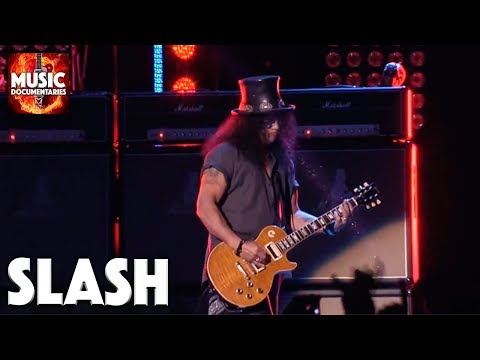
Slash’s evolution as a guitarist has long been tied to both instinctive brilliance and personal turbulence. While his playing rarely faltered, the shifting dynamics within Guns N’ Roses ultimately pushed him toward new creative paths—ones that would define his career beyond the band’s classic era.
A Natural Player in a Changing Band
Slash was never the kind of guitarist who needed extensive warm-ups to deliver a commanding performance. Even during the most chaotic years of Guns N’ Roses, his style appeared effortless, with each riff delivered with precision and intensity. However, as the band’s musical direction began to evolve, he found himself increasingly out of sync with its trajectory.
Frontman Axl Rose embraced experimentation, steering the band toward a broader sonic palette that included synthesizers, piano-driven ballads, and industrial influences. This shift made it more difficult for Slash to incorporate the blues-rooted, street-level rock style that had defined the band’s earlier work.
Searching for an Outlet Beyond Guns
Rather than settling into the role of a session musician—despite collaborations with artists like Michael Jackson and Lenny Kravitz—Slash sought a more personal creative outlet. That desire led to the formation of Slash’s Snakepit, a project that allowed him to revisit the gritty, riff-driven sound he felt was fading from Guns N’ Roses.
The band’s debut carried echoes of what might have followed Appetite for Destruction, but instability behind the scenes proved familiar. His later project, Slash’s Blues Ball, continued that exploration, though it was similarly affected by inconsistency and personal struggles.
Reflecting on that era, Slash admitted:
“A lot of it was to alleviate the craziness of what Guns had already done. So it really was an outlet. I was trying to put a band together, but neither one of those bands were very stable. I wasn’t very stable, and there was normally one other member who wasn’t. So the chances of longevity with either of those bands were pretty slim.”
Survival, Reinvention, and a Return to Roots
It would take several more years—and a stint with Velvet Revolver—before Slash began to make lasting changes in his personal life. A serious heart condition ultimately became the catalyst for sobriety, forcing him to reassess his lifestyle. In the years since, he has not only abandoned substance abuse but also given up smoking, channeling his focus into a relentless work ethic.
Although Slash’s Blues Ball never resulted in a formal album release, its spirit can be traced in later projects such as Orgy of the Damned. Featuring a rotating cast of vocalists and rooted in traditional blues, the record reflects a return to the music that first inspired him.
Looking back on albums like It’s Five O’Clock Somewhere, it is remarkable that Slash was able to produce work of such quality during a period of personal instability. Even at his lowest points, his playing remained a defining force—underscoring his enduring importance to the legacy and sound of Guns N’ Roses.