




When Bob Dylan Honored Other Artists Through Song
via What's Now / YouTube
Bob Dylan has always written as a listener as much as a creator. Long before the songs turned him into a generational voice, he was absorbing records, borrowing phrasing, studying structures, and quietly filing away what moved him. That sense of musical lineage never disappeared, even as his own work reshaped popular songwriting.
Across decades, Dylan’s catalog shows moments where admiration turns into acknowledgment. Sometimes it’s subtle, woven into a melody or a lyrical turn. Other times, it’s more direct, with songs that clearly point back to the artists who shaped his thinking or earned his respect. These weren’t nostalgic exercises or polite gestures. They were personal reckonings with influence, loss, and artistic debt.
What makes these tributes interesting is how Dylan handled them on his own terms. He rarely copied outright or explained himself afterward. Instead, he filtered those influences through his own voice, letting the songs stand as quiet markers of respect. Looking at a few of these moments offers a different way to understand how Bob Dylan honored the musicians who mattered to him, not with speeches or dedications, but with the kind of songs that last.
“Song To Woody” (Bob Dylan, 1962)
“Song To Woody” sits near the very beginning of Bob Dylan’s recording career, but it already reveals how seriously he took musical influence. Released on his self-titled debut, the song stands apart from the album’s traditional material, not because it’s louder or more complex, but because it’s openly personal. Dylan wasn’t hiding where he came from, and he wasn’t pretending to arrive fully formed.
By the time he wrote the song, Dylan had already made his pilgrimage east, leaving Minnesota with one clear goal in mind: finding Woody Guthrie. After tracking him down in New Jersey, Dylan spent time singing for his hero, absorbing stories, and watching a master whose health was already failing. The encounter left a deep impression, and “Song To Woody” feels less like imitation than a conversation across generations.
Rather than copying Guthrie’s voice or politics outright, Dylan used the song to establish his own footing. The melody borrows from folk tradition, but the lyrics are reflective, even restrained. It’s a young songwriter acknowledging the road that brought him there, while quietly signaling that he intended to walk it in his own way.

“Roll On John” (Tempest, 2012)
Nearly fifty years later, Dylan was still writing tributes, though the tone had changed. “Roll On John,” from Tempest, is a measured and mournful reflection on the life and death of John Lennon. It’s not a historical retelling so much as a meditation, moving through images, memories, and cultural weight without settling into a single narrative.
Dylan and Lennon crossed paths several times during the late 1960s and 1970s, sharing mutual respect while existing in different creative orbits. Lennon’s death in 1980 marked a permanent rupture in popular music, and “Roll On John” approaches that loss with distance rather than immediacy. Dylan wrote the song decades later, allowing time to shape how the story could be told.
The track reportedly took shape after Dylan joined a quiet tour of Lennon’s childhood landmarks in Liverpool in 2009, unnoticed by most of the group. That anonymity feels fitting. “Roll On John” isn’t about celebrity or shock, but about legacy and absence. It’s Dylan reflecting on another artist whose work altered the landscape, even after his voice was gone.

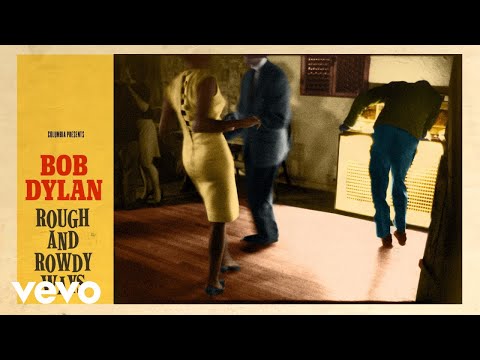
“Goodbye Jimmy Reed” (Rough And Rowdy Ways, 2020)
“Goodbye Jimmy Reed” brings a different energy to Dylan’s tribute writing. Appearing on Rough And Rowdy Ways, the song bursts forward with rhythm and humor, cutting through an album filled with slower, heavier reflections. It feels alive, loose, and deeply rooted in the blues tradition Dylan has leaned on for decades.
Jimmy Reed’s influence on Dylan runs deep, stretching back to his early fascination with electric blues and rhythm-driven songwriting. Reed’s music wasn’t flashy, but it was infectious, built on grooves that invited repetition rather than reverence. Dylan had long acknowledged that influence, even covering Reed’s material during sessions in the early 1980s.
Instead of mourning Reed, Dylan celebrates him by channeling the spirit of his music. The song leans into repetition, call-and-response phrasing, and sly humor, mirroring the feel of Reed’s recordings without copying them outright. It’s less a farewell than a continuation, showing how influence doesn’t end when the artist is gone—it just keeps moving through new voices.