When AC/DC Took Over CBGB
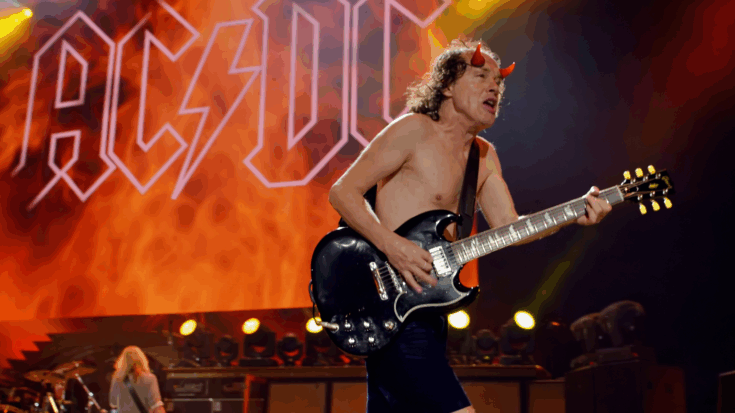
via "AC/DC" / Youtube
When AC/DC touched down in New York City in 1977, they stepped into a cultural storm. The city’s underground was alive with the raw urgency of punk, while traditional rock had begun to lose its bite. Glam rock was fading, progressive rock had grown increasingly complex, and audiences were hungry for something visceral.
AC/DC arrived with precisely that—an unrelenting, high-voltage sound that didn’t quite belong to punk but carried the same ferocity. Still, guitarist Angus Young was quick to distance the band from the label. “We just call ourselves a rock band,” he said. “We don’t like being classified as a ‘punk rock’ band. Not everyone can be punk rock. It’s great that there are new bands, fresh faces and all that, but there are good bands and bad bands within that punk rock.”
Reflecting on the genre’s growth in the United States, Young added:
“Actually, the punk thing is pretty cool in America. It’s not like England where it’s a very political thing — a dole queue type thing. There’s too much money over here to classify all the punk bands as dole queues and dropouts. It’s just a young thing — a new breed type thing.”
Between Punk Hype and Hard Rock Reality
Despite rejecting the tag, AC/DC found themselves marketed as a punk act during their first American tour. Promoters leaned into the buzz, even securing coverage in PUNK magazine. The strategy worked, landing the band a major debut at the Palladium on August 24, where they opened for the Dictators and the Michael Stanley Band.
Onstage, the band delivered a performance that quickly erased any doubts. Dictators’ founder Andy Shernoff later recalled their impact: “They were great, very friendly. They were not superstars yet, they were easy to hang out with, no pretension, no attitude.” He added with a laugh, “Angus is a midget! Bon Scott was small, too. It’s amazing. How can short guys make a sound like that? It’s almost technically impossible.”
Shernoff was even more emphatic about their live prowess:
“They had killer live songs, better than on the studio albums. People loved them. They were fantastic, no bullshit.”
Yet, even as AC/DC benefited from punk’s momentum, Young remained openly critical of the scene. Taking aim at bands like Ramones, he remarked, “They’re all trying to do a Small Faces thing… It’s pretty easy for a guy to go up there and do all that, but they can’t play.” Speaking later, he reinforced the band’s musical roots:
“We liked Chuck Berry and Berry songs about cars, women and party time. That, to us, was Rock and Roll… (Punks) were locked into selling anarchy, like a political thing. To be honest with you, the first time I heard the word ‘anarchy’, I had to get a dictionary to look up the fucker! I’m limited, meaning a limited education, so that wasn’t communicating anything to me.”
The Night CBGB Was Taken by Storm
Fresh off their Palladium triumph, AC/DC wasted no time pushing further into New York’s underground. Just an hour later, they arrived unannounced at CBGB—the legendary venue that had helped launch acts like Patti Smith, Blondie, and Talking Heads.
Plugging into the club’s modest sound system, the band tore through extended versions of “Live Wire” and “She’s Got Balls,” stretching songs into sprawling showcases of guitar solos and raw power. Frontman Bon Scott embodied the band’s stripped-down swagger, while Angus Young’s frenetic energy pushed the performance into chaos.
Fanzine writer Robert Francos recalled the moment vividly:
“As Marbles’ set was ending, suddenly there was a commotion at the back of the club… Then I noticed part of the crowd moving toward the stage… they announced the next band to play… and it was not one who was scheduled.”
What followed was part spectacle, part invasion. Francos described Young weaving through the crowd mid-performance:
“At one point, Angus switched guitars… He then made his way through the crowd, while playing wild solo licks, and went outside… talking to the transient gents from the Palace Hotel milling outside CBGB.”
The impromptu set has since become a piece of rock folklore, widely circulated in bootlegs. In one night, AC/DC bridged two worlds—punk’s gritty underground and hard rock’s rising dominance—proving that while labels may have tried to define them, their sound ultimately spoke louder than any category.