




The Band That Changed Geddy Lee’s Life

via "YeOldeRock" / Youtube
Few bands fused progressive ambition with hard rock force as unpredictably as Canada’s Rush. Over a recording career spanning more than five decades, the trio cultivated a sound that merged crushing riffs with intricate, cerebral arrangements—an unlikely balance that became their defining signature.
Rather than splitting the difference between genres, Rush created a distinct musical language where complexity and heaviness coexisted in constant tension. That dynamic proved essential to their ascent. While many of their peers faltered in the face of punk’s late-1970s disruption, Rush endured, transitioning into bona fide MTV-era stars in the decade that followed.
Rooted in Rock, Reaching Beyond Prog
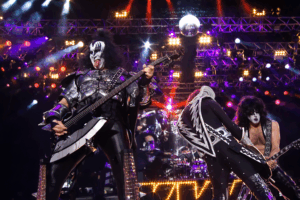
Unlike progressive contemporaries such as Yes and Emerson, Lake & Palmer, whose origins were steeped in psychedelia, Rush developed within the sturdier framework of classic rock. Early touring slots alongside acts like KISS, Blue Öyster Cult, T. Rex, Aerosmith, Ted Nugent, and Lynyrd Skynyrd reinforced a harder, more grounded edge.
That foundation helped the band avoid the excess that ultimately undermined much of the progressive rock movement. Even as Rush embraced conceptual storytelling and expanded compositions inspired by the era’s fascination with the cosmic and the grand, they maintained a visceral, riff-driven core that kept their music immediate and accessible.
The Who’s Blueprint and Geddy Lee’s Vision
Central to that balance was frontman and bassist Geddy Lee, whose musical sensibilities were shaped by rock’s evolution from the British Invasion through the rise of arena rock. Influences from The Beatles and Cream informed his early perspective, but one band stood above the rest.
“I think most rock bands today wouldn’t sound the way they sound without The Who,” Lee said in a 2013 interview with SiriusXM Classic Vinyl. “I think they are one of the most important bands to ever come out of England. Certainly, in my career, the most influential in terms of songwriting.”
While The Beatles catalyzed the British Invasion and The Rolling Stones embodied its rebellious spirit, The Who anticipated rock’s next phase. Tracks like “My Generation” delivered a raw intensity that aligned more closely with American garage rock than with the era’s increasingly psychedelic London scene.
As the 1960s closed, guitarist Pete Townshend expanded his songwriting into ambitious narratives, including the rock opera Tommy, while Roger Daltrey grew into a commanding frontman capable of carrying that weight. With Keith Moon’s explosive drumming and John Entwistle’s thunderous bass lines, The Who established a blueprint that would shape the sound of 1970s rock.
Rush absorbed those lessons without imitation. By grounding their progressive ambitions in rock’s foundational power, they sidestepped the pitfalls that derailed many of their peers—ultimately becoming one of Canada’s most commercially successful bands while remaining firmly committed to their own artistic vision.