




The Bob Dylan Song Bono Didn’t Get Right
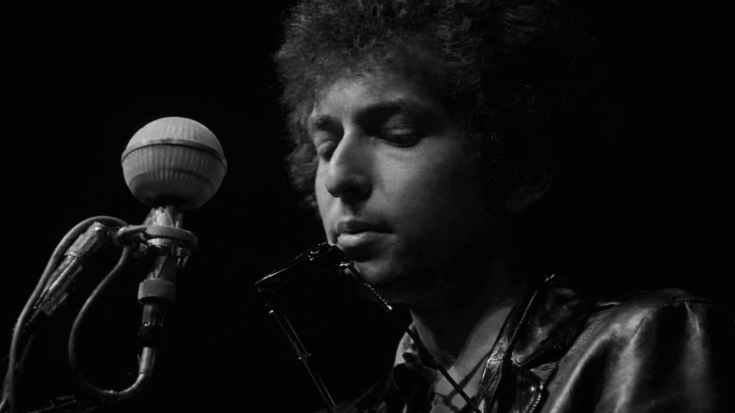
via "Monotone" / Youtube
There is a distinct rhythm to every U2 performance once Bono takes the microphone. While he has never positioned himself as a technically flawless singer, his voice carries an emotional urgency that has long defined the band’s sound. From the era of The Joshua Tree to the present, Bono’s delivery reflects a restless search for meaning, elevating each performance into something closer to a spiritual experience.
That ambition, however, comes with risk. Bono’s tendency to perform instinctively—often leaning into improvisation—means that not every moment lands as intended. Yet this unpredictability is also central to U2’s identity. Their songs are built with the stage in mind, designed to stretch, evolve, and absorb the energy of the moment, sometimes even incorporating fleeting nods to rock’s past.
Standing Beside a Legend
For most musicians, sharing a stage with Bob Dylan would represent a career-defining milestone. Widely regarded as one of the most influential songwriters in modern music, Dylan has maintained an enigmatic presence while resisting the trappings of myth. His artistry has always leaned toward reinvention, leaving audiences to interpret his work rather than offering definitive meaning.
Despite Bono’s deep admiration, stepping into Dylan’s orbit proved daunting. What might seem like a casual singalong to classics such as “Like a Rolling Stone” becomes a far more serious undertaking when performed alongside their creator. That pressure came into sharp focus during a live collaboration in the 1980s, when Bono joined Dylan onstage for “Blowin’ in the Wind.”
Recalling the experience, Bono admitted:
“Bob Dylan asked us, ‘You want to go onstage?’ I’d been learning to improvise onstage, and he said, ‘Do you know ‘Blowin’ in the Wind’?’, and I said, ‘I think so.’ I didn’t. I just walked out and could see that it was our home crowd in Ireland. You could see that [I] go down in flames. And Dylan was generous about it. He said, ‘Well, I make ‘em up all the time.’”
Lessons in Improvisation
The moment underscored both Bono’s artistic courage and the limitations of improvisation when applied to Dylan’s material. While Bono had previously adapted lyrics in performances—such as altering “All Along the Watchtower” during Rattle and Hum—doing so in real time at a Dylan show carried far greater stakes.
By contrast, artists like Tom Petty approached Dylan’s catalog with a different kind of fluency. Performing alongside Dylan, Petty and the Heartbreakers demonstrated an almost instinctive grasp of his songs, allowing them to adapt seamlessly even under loose or spontaneous conditions.
Bono, by his own admission, had not yet reached that level of ease. Still, his willingness to take the stage with Dylan spoke volumes about his artistic intent. Rather than playing it safe, he embraced the uncertainty of the moment—an approach that reflects his broader philosophy as a performer. Though he may never claim Dylan’s stature, Bono’s commitment to expressing himself with honesty and conviction ensures his place within rock’s ongoing narrative.