




What Yoko Ono Told Paul McCartney About John Lennon Rumors
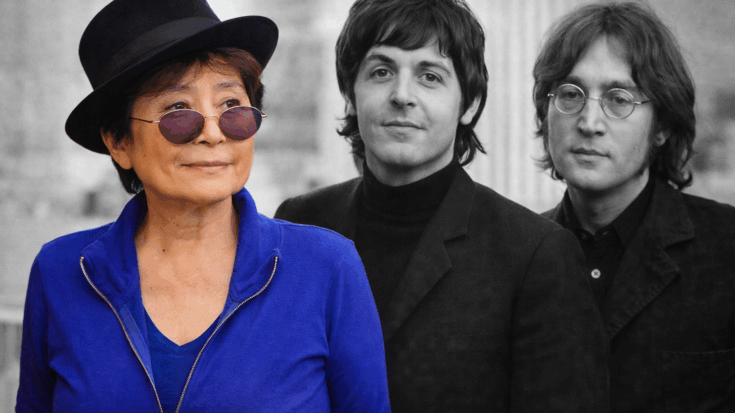
Decades after the end of The Beatles, new discussions about the group’s personal dynamics continue to surface. In a previously published interview with Vanity Fair, Paul McCartney recalled a striking conversation he once had with Yoko Ono following the death of John Lennon in 1980.
The exchange revealed an unexpected moment of reflection from Ono and offered McCartney’s candid perspective on rumors that have surrounded Lennon for decades.
A Phone Call in the Wake of Tragedy
According to McCartney, the conversation happened shortly after Lennon’s murder in December 1980. In the emotional aftermath of the loss, Ono reached out to him and made a comment that took him by surprise.
“She [Yoko Ono] is an artist. She’s kooky. But John loved her, and that’s the bottom line. You really can’t go beyond that, no matter what you might think. Not my type, but I swear she rang me shortly after John died and said, ‘You know, I think John might have been gay,’” McCartney said.
The remark stood out to McCartney not only because of its timing but also because it conflicted with his own long history alongside Lennon. Having spent years touring, writing, and sharing living spaces with his bandmate during the 1960s, McCartney said he had never encountered anything that suggested such a possibility.
“I went, ‘I’m not sure.’ I said, ‘I don’t think so. Certainly not when I knew him.’ Because we’d been in the ’60s. We’d been around with loads and loads of girls. And I bumped into seeing him jacking…a lot of girl action. And I’d slept with John very often, but there was never anything. There was never a gesture, never an expression. It was nothing. So I had no reason to believe this at all,” he continued.
For McCartney, the comment seemed less like a factual observation and more like a moment shaped by grief and reflection.
Revisiting the Brian Epstein Rumors
McCartney also addressed one of the most persistent stories tied to Lennon’s personal life: the 1963 trip to Spain with Beatles manager Brian Epstein, who was openly gay. Over the years, speculation surrounding the trip has fueled rumors about Lennon’s sexuality.
However, McCartney said he never interpreted the situation that way. Instead, he believed Lennon may have been engaging in a subtle form of power dynamics with Epstein, who held enormous influence over the band’s career.
“But there were rumors because Brian Epstein—John went with Brian [to Spain in 1963]. But I saw that as a power play, which was very John. Brian would ask him as a homosexual thing—a good-looking boy who Brian fancied. They went down to Spain, had a fun time. No doubt John would play into the thing. I personally didn’t think anything had happened. Certainly never heard about anything happening. But I saw it as: ‘You want to deal with the Beatles? I’m the leader,’” McCartney explained.
His interpretation highlights Lennon’s often mischievous and strategic personality, a trait many close to him have described over the years.
Lennon’s Political Mind and Enduring Mystique
Beyond the rumors and speculation, McCartney painted a portrait of Lennon as someone who understood influence and symbolism—both in music and in life. According to him, Lennon possessed a sharp awareness of politics and power, even if he did not always express it openly.
“John was very political. John, remember, had read the complete works of Winston Churchill. They had them at his house. He was a big Churchill fan. In fact, he’s named John Winston Lennon. So John was very political that way. He wouldn’t voice it, but he would play it,” McCartney said.
The interview, originally conducted in 2015, has resurfaced in recent discussions surrounding McCartney’s documentary Man on the Run, drawing renewed attention to the complex relationships that defined the Beatles’ inner circle.
For longtime fans and historians, the story offers more than just another anecdote—it underscores how even decades later, Lennon remains a figure surrounded by mystery, interpretation, and deeply personal memories from those who knew him best. Conversations like the one McCartney recalled reveal how grief, friendship, and speculation often intertwine when reflecting on a cultural icon whose life continues to invite both admiration and curiosity.