




What Really Happened After John Lennon’s Jesus Remark
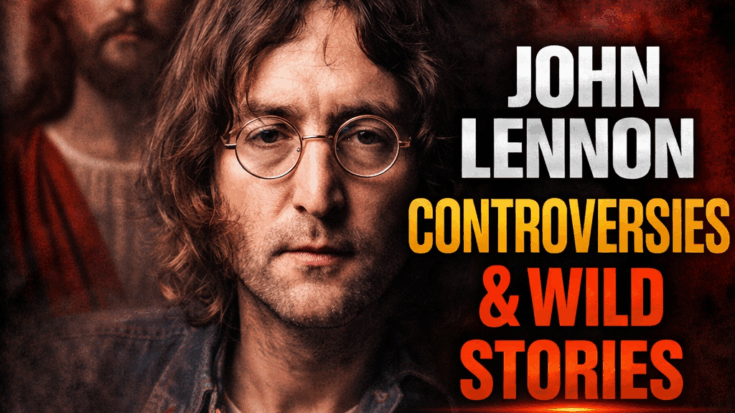
The world was completely caught up in Beatlemania in 1966. Millions of fans adored the Beatles, the biggest band in the world. They followed their every move. John Lennon, the sharp-tongued and often volatile co-founder of the group, was at the center of the storm.
That year, Lennon spoke with British journalist Maureen Cleave, and the conversation would later become one of the most talked-about moments in music history. The London Evening Standard published the interview on March 4, 1966. In the piece, Lennon casually remarked that the band was as popular as Jesus Christ. The quote did not cause much trouble in the UK at first. However, months later, the American teen magazine Datebook reprinted the comment, this time out of context. That was when things truly got out of hand, especially in the conservative parts of the United States, often referred to as the “Bible Belt.” Some radio stations stopped playing Beatles songs, and people in several states began organizing record burnings.
The backlash came at a very stressful time. Lennon’s comments were suddenly everywhere just as the band was preparing for a major tour of the United States. Lennon eventually explained publicly that his remark was not meant as an attack on religion but simply an observation about how famous the band had become. Their manager, Brian Epstein, also stepped in to calm the situation. Over time, that single sentence became a famous part of Beatles history. However, many fans do not realize that Lennon made several other strange, surprising, and sometimes uncomfortable remarks during the same interview. Cleave’s article offered a rare glimpse into the musician’s personality, his home life, and the unusual mixture of humor, honesty, and bluntness that made him so fascinating. Here are five other strange moments and comments from that famous interview that people often forget.
1. A Comment That Might Have Been Even More Shocking
The remark about Christianity received all the attention, but Lennon may have said something even more offensive during the conversation, especially by today’s standards. During the interview, Lennon briefly talked about his three-year-old son, Julian Lennon. He mentioned that he was considering sending Julian to a French school in London. However, one of his comments came across as both awkward and rude.
Lennon said that when he was younger, he did not like being around people he considered unattractive. He even made a general statement suggesting that many of those people were from other countries. The comment sounded careless and insensitive, especially since the Beatles already had fans all over the world. During the 1960s, Lennon often spoke this way. He frequently said whatever came to mind without much thought. Sometimes his honesty made him sound witty and insightful, but at other times it got him into trouble.
Many historians believe the interview captures Lennon at a time when he was still learning how to handle global fame. He was only 25 years old, yet he was already one of the most famous people on Earth. Because reporters closely followed everything he said, even casual remarks could quickly become controversial.
2. The Strange Objects in Lennon’s House
Another fascinating part of Cleave’s article had nothing to do with controversial opinions. Instead, it focused on the unusual objects scattered throughout Lennon’s home. By 1966, the Beatles were extremely wealthy, and Lennon had begun filling his house with all sorts of odd items. Cleave described several objects that sounded more like movie props than decorations in a musician’s living room.
One room reportedly contained dozens of miniature racing cars. Lennon explained that he had briefly become obsessed with collecting them, but the fascination did not last long. He said the interest only lasted about a week before he moved on to something else.
In another room stood a full suit of armor that Lennon had named Sidney. The strange decoration seemed more suited to a medieval castle than a pop star’s house. There was also a fruit machine, a type of slot machine popular in the UK, and even a full gorilla costume. Lennon said he bought the outfit on impulse because he thought it would be amusing to drive around town wearing it.
Apparently, all four Beatles had once considered the same idea. Lennon said the band had talked about getting matching costumes and driving around in their cars dressed as gorillas. He was the only one who actually followed through. He joked that he had only worn the suit twice and had even considered turning it into a strange fur coat by removing the head. It was the kind of odd and playful idea that suited Lennon perfectly, given his unpredictable personality.
Fans rarely saw this side of the musician. When he was not in front of screaming crowds or working in the recording studio, Lennon seemed to enjoy surrounding himself with unusual objects and jokes that reflected his quirky sense of humor.
3. An Unexpected Place for Religious Symbols
One of the most surprising details in Cleave’s article was that Lennon’s home actually contained several Christian items. Because the “more popular than Jesus” comment caused so much outrage, many people assumed Lennon had little interest in religion. However, the interview suggested something more complicated.
Cleave noted that Lennon owned a large crucifix similar to those seen in Roman Catholic churches. The item was displayed prominently so visitors could easily notice it.
He also had an enormous Bible that he had purchased in Chester, England. According to the article, the book was so large that it stood out in the middle of the room. These objects added another layer to Lennon’s complex personality. He often criticized organized religion, yet he clearly remained interested in religious symbols and spiritual ideas.
Lennon’s relationship with religion would continue to evolve throughout his life. In the late 1960s and early 1970s, he and his partner Yoko Ono explored a variety of spiritual beliefs. The presence of religious items in his home suggests that his controversial comment may have been more of a cultural observation than a rejection of faith.
4. A Surprisingly Lazy Lifestyle
Another interesting moment in the interview came when Lennon discussed his daily routine—or lack of one. By the mid-1960s, the Beatles were so famous that living a normal life had become almost impossible. Thousands of fans would gather wherever the band appeared, and public outings could quickly turn into chaotic scenes.
Cleave even compared their level of fame to that of Queen Elizabeth II. In other words, they were so recognizable that even a short trip outside could become a major event.
Because of this, Lennon spent much of his time indoors. His days were filled with writing songs, reading books, watching television, and spending time with friends and family. However, he admitted that he had little interest in physical activity.
During the interview, Lennon openly joked about how physically lazy he was. While he enjoyed creative work like songwriting, he said he rarely felt motivated to do anything physically demanding. He even joked that sex was the only physical activity he truly enjoyed. The blunt remark was classic Lennon: honest, slightly shocking, and impossible to ignore.
For Cleave, it was yet another example of how Lennon spoke about topics that most celebrities of the era would have carefully avoided.
5. The Day Lennon Went to the Doctor
The interview also included an amusing story from the day Cleave spent following Lennon around. At one point, they stopped for lunch before heading to a doctor’s appointment. Lennon needed medical attention for something rather unusual: a small sea urchin spine stuck in his toe.
He had injured himself during a tropical vacation earlier that year. In January 1966, Lennon and his wife, Cynthia Lennon, traveled to the Caribbean with fellow Beatle Ringo Starr and Starr’s wife, Maureen Starkey Tigrett. Starr even took a photograph of Lennon relaxing on the beach during the trip. At some point while walking along the shore, Lennon stepped on a sea urchin, and a small spine became lodged in his foot.
He visited the doctor on the day of Cleave’s interview because the injury still had not fully healed months later. Lennon joked about the situation in his usual humorous way. He said he did not want to end up like Dorothy Dandridge, the Hollywood actress whose death had been surrounded by tragic rumors and speculation. Lennon laughed that he did not want to be remembered as someone who died decades later because of a tiny splinter.
Before the appointment, he even told Cleave that he had carefully cleaned the injured foot, a small detail that made the story feel surprisingly personal.
A Portrait of Lennon at a Unique Moment
Looking back, Cleave’s interview captures a fascinating moment in Lennon’s life. He was already one of the most famous musicians in the world, yet he still seemed like a young man trying to understand his place in it all. He often spoke without thinking, which sometimes resulted in brilliant observations and other times in embarrassing remarks.
That combination of honesty and unpredictability made him one of the most compelling figures in music history. The famous phrase “more popular than Jesus” ended up dominating the conversation for decades. Yet the rest of the interview reveals something just as interesting: Lennon’s personality.
It shows a man who decorated his house with strange objects, joked about driving around in a gorilla suit, kept religious symbols despite criticizing religion, and openly admitted that he preferred relaxing to exercising. These small details remind fans that behind the fame and cultural influence was still a complicated human being—full of contradictions, humor, and curiosity.
More than fifty years later, Lennon remains one of the most discussed figures in popular music. Interviews like this continue to fascinate people because they reveal what an artist truly thought, often without any filter. And sometimes, those spontaneous remarks become just as memorable as the music itself.