




This Classic Rock Band Kept Missing No. 1—and Set a Record
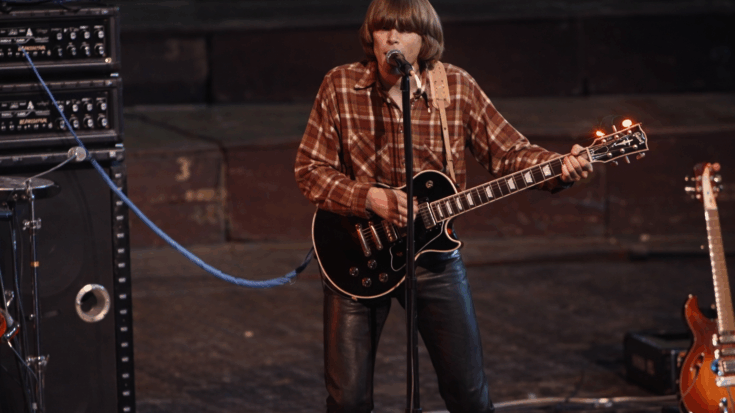
via "Creedence Clearwater Revival" / Youtube
Creedence Clearwater Revival stands as one of the most commercially successful and culturally significant bands in rock history. Known interchangeably as Creedence or CCR, the California group—led by singer, songwriter, and guitarist John Fogerty—crafted a distinctive sound that fused hard rock with swampy, roots-driven influences.
During their peak years at the tail end of the 1960s, CCR became a dominant force in popular music. The band has sold over 30 million albums in the United States alone, alongside millions of singles released during the height of the hippie and young Boomer era. In 1969, especially—a year often regarded as a defining moment in rock history—CCR emerged as one of the most successful and visible acts, carrying that momentum into 1970.
Their catalog, including songs like “Proud Mary,” “Bad Moon Rising,” and “Green River,” remains a staple of classic rock radio and continues to hold both cultural and financial value decades later.
The Record That Sets Them Apart
Despite their massive popularity, Creedence Clearwater Revival holds a uniquely bittersweet distinction in chart history. According to Billboard, the band set the record for the most No. 2 hits without ever reaching the No. 1 spot.
While other major artists—including Drake, Taylor Swift, Madonna, Justin Bieber, and the Carpenters—have equaled or surpassed CCR’s number of No. 2 songs, each of those acts has also achieved at least one chart-topping single. CCR, notably, never did.
This unusual record underscores both the band’s consistent success and its repeated near-misses, giving their legacy a rare and ironic edge: one of the biggest bands of their era, yet never quite the biggest on paper.
Five Near-Misses at the Top
Creedence Clearwater Revival’s run of No. 2 hits occurred within a remarkably short window, between March 1969 and October 1970.
It began with “Proud Mary,” which spent three weeks at No. 2 but was held off the top spot by “Everyday People” by Sly and the Family Stone and “Dizzy” by Tommy Roe. Just a few months later, “Bad Moon Rising” climbed to No. 2, only to be blocked by Henry Mancini’s “Love Theme from Romeo and Juliet.”
The pattern continued when “Green River” peaked at No. 2, unable to surpass the Archies’ “Sugar, Sugar.” In 1970, the double A-side “Travelin’ Band” / “Who’ll Stop the Rain” followed the same trajectory, stopping short of No. 1 behind Simon and Garfunkel’s “Bridge Over Troubled Water.”
CCR’s final brush with the top came later that year, when “Lookin’ Out My Back Door” / “As Long as I Can See the Light” also reached No. 2, this time behind Diana Ross’s “Ain’t No Mountain High Enough.”
Though they never secured a No. 1 hit, these five near-misses ultimately defined a chart legacy unlike any other—one built not on absence, but on relentless, almost-there dominance.