




The Wild, Game-Changing Moments That Shaped Rock ’n’ Roll History

The Wild, Game-Changing Moments That Shaped Rock ’n’ Roll History
Rock and roll has always felt like more than just music. It carries noise, emotion, and rebellion, and it is deeply woven into American society. However, the story behind it is far wilder than most people realize. The genre did not suddenly appear out of nowhere in the 1950s. Instead, it grew from gospel, blues, folk, country, and rhythm and blues. Over time, it evolved again and again, eventually branching into styles ranging from punk to metal to classic rock.
Rock music still fills stadiums and playlists today, but many of its most fascinating stories have been forgotten. Most people never learned these surprising facts about the history of rock and roll in school.
Sister Rosetta Tharpe: The Real Rock Godmother
Long before electric guitars became symbols of rebellion, one woman was already turning them into something bold and distinctive. In the 1930s and 1940s, Sister Rosetta Tharpe stunned audiences by blending gospel lyrics with dramatic electric guitar performances. She did not limit herself to church stages. Instead, she brought spiritual music into nightclubs and concert halls, a move many people considered controversial. Her guitar tone was loud, gritty, and filled with distortion, something rarely heard at the time.
Many musicians believe she should have been inducted into the Rock and Roll Hall of Fame long before 2018. Her style influenced artists ranging from Elvis Presley to British blues musicians. Without her fearless mix of religious music and electric swagger, rock might have taken a very different path.
Chuck Berry: The Rock and Roll Blueprint
If rock and roll had to name a single architect, Chuck Berry would be near the top of the list. His sharp lyrics, signature guitar riffs, and energetic performances helped define the sound of the 1950s. Berry had a gift for writing about teenage life, capturing school dances, cars, young love, and the thrill of growing up. His songs spoke directly to teenagers at a time when they were becoming a powerful consumer group, helping push rock music into the mainstream.
Countless bands used his guitar style as a foundation. By blending country with rhythm and blues, he created a sound that was accessible to many listeners. Later, numerous British Invasion bands built their careers by covering his songs. Rock music as we know it would sound very different without him.
The Term “Rock and Roll” Did Not Come from Music
The words “rock” and “roll” existed long before electric guitars. For centuries, “rocking” referred to movement or shaking, while “rolling” often described motion at sea. Over time, the phrase gained additional meanings, including references to spiritual energy in gospel music. By the early 1900s, young people were using “rock and roll” to describe dancing and, at times, more suggestive behavior. The phrase did not officially become tied to a music genre until the early 1950s.
Radio DJ Alan Freed played a major role in popularizing the term on mainstream radio. He used it to describe rhythm-heavy songs by Black musicians, helping introduce the sound to wider audiences. Once the name caught on, there was no turning back.
Was Elvis Presley Too Shocking for Television?
It may be hard to imagine now, but there was a time when Elvis Presley was considered dangerously inappropriate. In 1956, his appearance on The Ed Sullivan Show divided the nation. Many viewers loved his voice and charm, while others were horrified by his hip movements. Some critics claimed his dancing was too sexual for family television. In certain areas, angry groups even burned him in effigy, calling him a bad influence on teenagers.
By his third appearance, cameras famously avoided filming him below the waist. What seems harmless today was once a cultural shockwave. Elvis did more than sing—he challenged social norms.
A Rolling Stones Logo Inspired by a Goddess
The Rolling Stones’ famous tongue-and-lips logo is one of the most recognizable images in music history. Designed by artist John Pasche in 1970, it perfectly captured the band’s rebellious attitude. The design is said to have been inspired partly by the Hindu goddess Kali, who is often depicted with her tongue sticking out. At the time, Mick Jagger had a growing interest in Indian culture, which influenced the band’s artistic direction.
The logo also echoed Jagger’s distinctive mouth, resulting in a symbol that was playful, defiant, and unforgettable—much like the band itself.
Stevie Nicks: Twice Honored in Rock History
Rock music has long been dominated by men, which makes Stevie Nicks’ achievements even more remarkable. She has been inducted into the Rock and Roll Hall of Fame twice. In 1998, she was honored as a member of Fleetwood Mac, and in 2019, she was inducted again as a solo artist. She remains the only woman to achieve this distinction.
Her poetic songwriting, mystical image, and unmistakable voice helped define an era of rock. She belongs to a very small group of artists recognized twice for their influence.
Lead Belly: Singing for Freedom
Lead Belly, born Huddie William Ledbetter, lived a life that sounded like a movie script. He was imprisoned more than once, and legend suggests that music helped secure his release. While serving time in Texas, he reportedly sang for Governor Pat Neff and composed a song asking for forgiveness. He was released not long afterward.
Years later, he found himself back in prison. Although the details remain debated, many believe his musical talent once again played a role in his early release. Whether fully true or not, the story highlights the power of music even in the harshest conditions.
“Wabash Cannonball”: A Folk Song That Shaped Rock
Before electric guitars ruled the airwaves, American folk music played a major role in shaping popular sound. “Wabash Cannonball” was first published in the 19th century under a different title and later became one of the most recorded folk songs of all time. It tells the story of a train journey across the United States. The Carter Family’s 1929 recording helped spread its popularity nationwide.
Over the decades, artists such as Johnny Cash and Leon Russell performed their own versions. Its storytelling style and adaptable melody influenced how early rock songs were written.
Queen: The Fan Club That Never Ended
Queen became one of Britain’s biggest rock bands after forming in 1970, producing iconic songs like “Bohemian Rhapsody” and “We Will Rock You.” One of their most remarkable achievements, however, has nothing to do with chart success. In 1973, they launched their official fan club, believed to be the oldest continuously running rock fan club in the world.
The club continued even after lead singer Freddie Mercury passed away in 1991. Decades later, thousands of devoted fans remain members. That enduring loyalty speaks volumes about the band’s impact.
Literary Inspiration Behind “Sympathy for the Devil”
“Sympathy for the Devil” is one of the Rolling Stones’ most discussed songs. Mick Jagger has said that French poet Charles Baudelaire influenced his mindset while writing it. The novel The Master and Margarita is also believed to have shaped the song’s themes.
Told from the devil’s perspective, the lyrics sparked controversy and reinforced the band’s dangerous reputation. The song proved that rock lyrics could be intellectual, provocative, and deeply layered.
Who Popularized the “Devil Horns” Gesture?
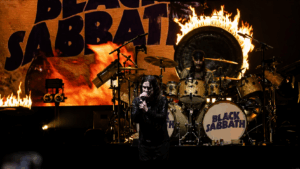
The raised-hand “devil horns” gesture has become a staple of rock culture. Ronnie James Dio often said he learned the sign from his grandmother, who used it as a symbol to ward off evil. He began flashing it onstage after joining Black Sabbath.
Gene Simmons later claimed he introduced the gesture to rock audiences and even attempted to trademark it in 2017 before withdrawing the request. Dio himself admitted he likely did not invent the symbol, but he undeniably helped make it iconic.
Rock and Roll vs. Frank Sinatra
Not everyone welcomed rock music. Frank Sinatra, one of the most celebrated vocalists of the 20th century, openly criticized the genre in the 1950s. He dismissed it as shallow and worried about its influence on young listeners. His harsh public statements reflected a growing generational divide.
Many older Americans viewed rock as chaotic and dangerous. Ironically, that criticism only strengthened rock’s rebellious appeal. Teenagers were often drawn to the music precisely because their parents disliked it.
An Unspoken Truth
Rock and roll did not develop in a straight line. It emerged from gospel churches, prison yards, folk songs, smoky clubs, and nervous television studios. It angered parents, inspired poets, borrowed ancient symbols, and united people across boundaries.
What began as a blend of rhythm and blues became a global force. Rock music continues to evolve as new artists reinterpret its sound, while classic recordings find new audiences. Every guitar riff and every raised pair of devil horns connects listeners to a story more than a century in the making—a story filled with rebellion, controversy, and music that refuses to fade.