




The Ringo Starr Song That Was Born From a Happy Accident

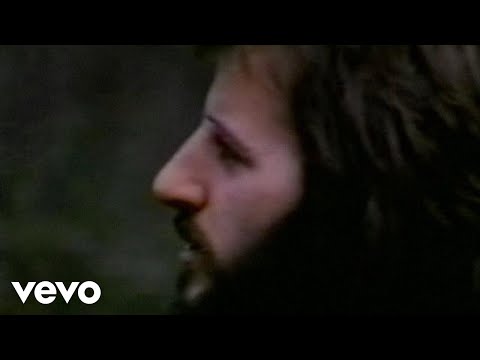
via Gold of music / youtube
Ringo Starr never resisted the notion that he was the least prolific songwriter in The Beatles—in fact, he embraced it. While his drumming helped define the group’s sound, Starr entered his solo career with a clear-eyed understanding of his limitations. Unlike his former bandmates, he didn’t claim to be a master composer, but he knew how to make a song feel good.
That humility became part of his charm. Starr often leaned on contributions from his inner circle, yet even when handed strong material, he approached it with a sense of disbelief at his own good fortune. His role wasn’t to outshine his peers in complexity—it was to deliver songs that connected, grooves that lingered, and performances that felt authentic.
He was also candid about his musicianship. On “Early 1970,” Starr openly admitted that he wasn’t particularly skilled outside of the drum kit. In earlier Beatles performances, he even joked about his vocal shortcomings, acknowledging that he would drift off-key during live renditions of “Boys” and “Act Naturally.” Still, self-awareness never held him back—it simply shaped the way he approached his craft.
A Solo Career Built on Feel, Not Flash
When The Beatles disbanded, there was little risk of Starr fading quietly into obscurity. His former bandmates ensured he remained musically active, and the results were unexpectedly triumphant. In fact, his early solo releases performed remarkably well, at times eclipsing those of Paul McCartney and John Lennon on the charts.
Where McCartney’s debut felt intimate and unfinished, and Lennon’s Plastic Ono Band project was stark and emotionally raw, Starr carved out a different lane entirely—one rooted in warmth, accessibility, and joy. His music didn’t aim to challenge the listener as much as it invited them in.
With George Harrison playing a key collaborative role, Starr released enduring tracks like “It Don’t Come Easy” and “Photograph,” songs that thrived on their laid-back sensibilities. Meanwhile, “Back Off Boogaloo” emerged as a defining moment—an infectious, rhythm-driven track that captured Starr at his most confident. It wasn’t just a hit; it was a statement that his instincts, however unconventional, were worth trusting.
The Happy Accident Behind ‘Back Off Boogaloo’
Despite his reputation for simplicity, Starr was no stranger to musical challenges. “Back Off Boogaloo,” inspired in part by Marc Bolan, pushed him beyond the steady backbeats he had mastered. Harrison suggested a specific rhythmic pattern, but executing it proved difficult.
Rather than forcing precision, Starr stumbled into innovation. Reflecting on the recording, he explained:
“‘Back Off Boogaloo’ is an incredible example of how accidents are sometimes fabulous when coming up with a song. You see, George wanted me to play that pattern on the bass drum but the problem is I’m not that efficient as a drummer. I can’t go (imitates a beat) and play regular. So I started doing it on the snare and it worked a treat. You know, it was just out of the blue.”
This willingness to embrace imperfection echoed a broader philosophy that had long defined The Beatles. The band famously left in quirks that other artists might have erased—the slightly uneven vocals of “Please Please Me,” the loose, almost chaotic textures of “I’m Looking Through You.” These weren’t flaws; they were signatures.
In Starr’s case, that philosophy became a guiding principle rather than a happy coincidence. “Back Off Boogaloo” didn’t succeed despite its irregularities—it thrived because of them. And in an era increasingly obsessed with polish and technical perfection, Starr’s approach served as a quiet rebellion. He proved that musicality isn’t always about precision; sometimes it’s about instinct, feel, and the courage to follow an idea even when it doesn’t come out “right.”
Ultimately, Starr’s legacy as a solo artist rests not on virtuosity, but on taste. He understood what a song needed—and just as importantly, what it didn’t. By leaning into spontaneity and trusting the moment, he turned limitations into strengths, reminding listeners that great music often lives in the spaces where control gives way to character.