




The Musician Compared to Jimmy Page by Rick Rubin
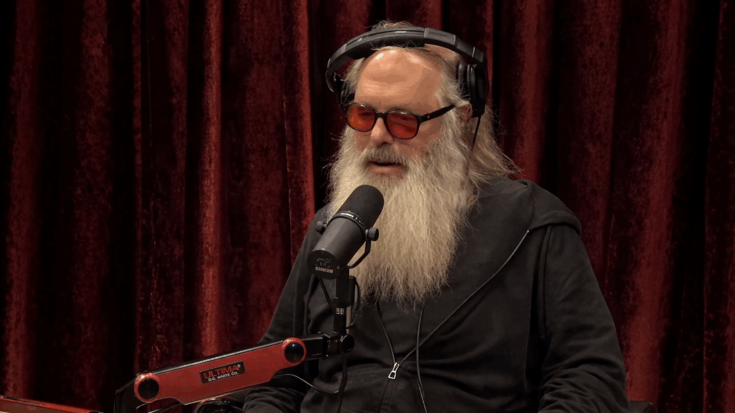
via "Victims Of A Down" / Youttube
For generations of rock guitarists, the idea of becoming Jimmy Page has been a near-universal fantasy. Page’s transformation from a working musician in The Yardbirds into the architect of Led Zeppelin helped define the very notion of a “guitar god.” His mystique—equal parts technical brilliance and enigmatic stage presence—cemented his legacy as one of rock’s most influential figures.
Yet decades later, producer Rick Rubin would look not to imitation, but to evolution. Rather than seeking a direct descendant of Page’s style, Rubin identified a modern equivalent in Tom Morello—a player whose philosophy echoed Page’s spirit of experimentation, even if the sound itself was entirely different.
A Different Kind of Guitar Hero
The comparison between Page and Morello is less about technique and more about intent. Both guitarists approached their instrument as a laboratory rather than a tradition-bound tool. Page’s explorations in alternate tunings and studio layering reshaped rock in the 1970s, while Morello reimagined the guitar’s possibilities decades later by drawing from unexpected influences.
One of those influences came from Rubin’s pioneering work in hip-hop. Having helped craft landmark albums like It Takes a Nation of Millions to Hold Us Back and Raising Hell, Rubin’s production style inspired Morello to ask a radical question: how could those textures be recreated on a guitar?
The answer would define his career. With Rage Against the Machine, Morello adopted a DJ-like mindset, manipulating pedals, feedback, and unconventional techniques to produce sounds that often seemed impossible without turntables. His playing blurred the line between instrument and machine, forcing listeners to reconsider what a guitar could actually do.
Rubin’s Vision: A Zeppelin for a New Era
When Rubin set out to form Audioslave, he saw the potential for something seismic. In his view, the band could mirror the historic leap from the Yardbirds to Led Zeppelin—a reinvention that would define a new era of rock.
As he later stated in Rick Rubin In the Studio:
“[This] could turn into a Yardbirds-into-Led Zeppelin scenario. In many ways, Tom Morello is the Jimmy Page of our time”.
The project’s ambition extended beyond the guitar. The addition of Chris Cornell—fresh from Soundgarden—brought a commanding vocal presence that inevitably drew comparisons to Robert Plant. Together, the lineup suggested a modern reinterpretation of classic hard rock grandeur.
Still, Audioslave was never about imitation. It was about channeling the same sense of scale and risk that had once made Zeppelin revolutionary.
Innovation as the True Benchmark
Where Page explored vast sonic landscapes through alternate tunings and layered compositions, Morello’s creativity often stemmed from limitation. His approach emphasized doing more with less—extracting entirely new sounds from a relatively minimal setup.
That philosophy is evident across his work, from the explosive riffs of Cochise to the atmospheric textures of Like a Stone. Whether deploying Whammy pedals or crafting percussive, turntable-like effects, Morello built a vocabulary that remains uniquely his own.
Importantly, his experimental edge is grounded in formidable technique. Tracks like Take the Power Back demonstrate his ability to match the precision and speed of elite virtuosos, placing him in the same conversation as players such as Steve Vai.
In the end, the connection between Page and Morello lies not in how they sound, but in how they think. Both reject the idea of the guitar as a fixed instrument, instead treating it as an open-ended medium—one defined not by tradition, but by imagination.