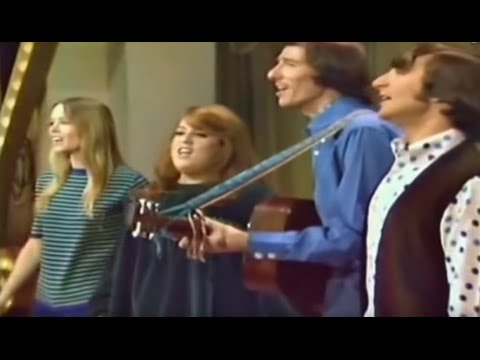



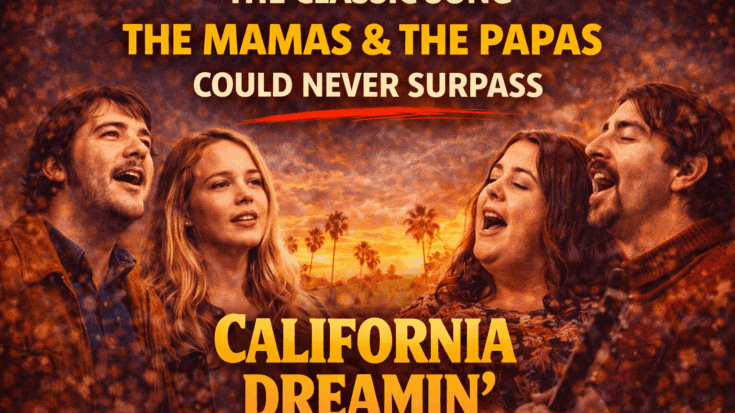
The Classic Hit The Mamas & The Papas Could Never Surpass
By the late 1960s, California had become the epicenter of rock and pop music. As the ideals of freedom, experimentation, and counterculture spread across the United States, the state’s sunny landscape and bohemian communities drew musicians searching for inspiration. From the creative enclave of Laurel Canyon to the neon glow of Hollywood Boulevard, California offered both opportunity and myth — a place where artists could reinvent themselves and help shape the soundtrack of a generation.
The state’s cultural magnetism was so powerful that it inspired countless songs celebrating its promise and mystique. Even later reflections, such as the Eagles’ cautionary tale “Hotel California,” hinted at the seductive pull of the Golden State. But few songs captured the dreamlike appeal of the West Coast as vividly as The Mamas and the Papas’ 1965 classic “California Dreamin’.”
Built on rich vocal harmonies and a haunting arrangement, the track conjures an atmosphere that feels both warm and melancholic. The opening guitar riff drifts in like a coastal breeze, while the distinctive flute solo adds a cinematic quality, evoking the shadowy streets of Los Angeles after dark. Together, these elements created one of the defining sonic portraits of California during the decade.
A Studio Moment That Turned to Magic
Part of what made “California Dreamin’” so special was the environment in which it was created. The recording took place at United Western Recorders, the same studio where The Beach Boys crafted their landmark album Pet Sounds. At the time, Los Angeles studios were buzzing with elite session musicians who frequently collaborated across projects, creating a rich and fluid creative ecosystem.
For the session, The Mamas and the Papas enlisted some of the era’s most respected players, including drummer Hal Blaine, keyboardist Larry Knechtel, bassist Joe Osborn, and guitarist P.F. Sloan. Their contributions helped shape the song’s distinctive atmosphere and elevate its relatively simple structure into something far more memorable.
Sloan later recalled how the recording session unfolded, noting that the magic of the track emerged almost spontaneously inside the studio.
“The ‘California Dreamin’ session was magical. John [Phillips] was very nervous. Nobody particularly liked the song, and to be honest with you, ‘California Dreamin’ was maybe three or four chords. I added the ‘Walk – Don’t Run’ Ventures guitar riffs for that ‘da da da da da da’. That was all creative work inside the studio when I heard them singing on the mic. I had recorded them with Barry McGuire on his second album, so I knew how good they were.”
What began as a modest arrangement quickly transformed into something timeless — a song that would come to define both the band and the era that produced it.
A Dream That Didn’t Last
The success of “California Dreamin’” placed The Mamas and the Papas among the most exciting acts of the mid-1960s. The group followed the single with a string of popular releases and quickly built a reputation for their lush harmonies and distinctive blend of folk and pop. Their influence was so immediate that other major artists, including The Carpenters and The Beach Boys, later recorded their own versions of the song in an effort to capture its magic.
Yet despite their meteoric rise, the band’s time together proved surprisingly brief. Just two years after the release of “California Dreamin’,” the group had already fractured. While they continued releasing music for a short time afterward, none of their later songs matched the cultural impact of their breakthrough hit.
Behind the scenes, the pressures of success were beginning to take their toll. Romantic complications between members, creative disagreements, and the era’s pervasive drug culture all contributed to growing tensions within the group. What had once been a collaborative musical partnership gradually became strained and unsustainable.
Michelle Phillips later reflected on the difficult atmosphere within the band during an interview with Goldmine.
“It was endless,” Michelle told Goldmine, reflecting on her time within the band. “Believe me, everybody wanted out. But we owed albums to Dunhill, and then Dunhill was sold to ABC, and then we owed albums to ABC. It was horrible because all we wanted was to get away from each other.”
In many ways, the story of The Mamas and the Papas mirrors the era that produced them — a burst of creativity and optimism that burned brightly but briefly. Though their time together was short, “California Dreamin’” endures as one of the most iconic recordings of the 1960s, forever tied to the romantic vision of California that once captivated an entire generation.