




The All Female Band That Impressed the Beatles and The Rolling Stones
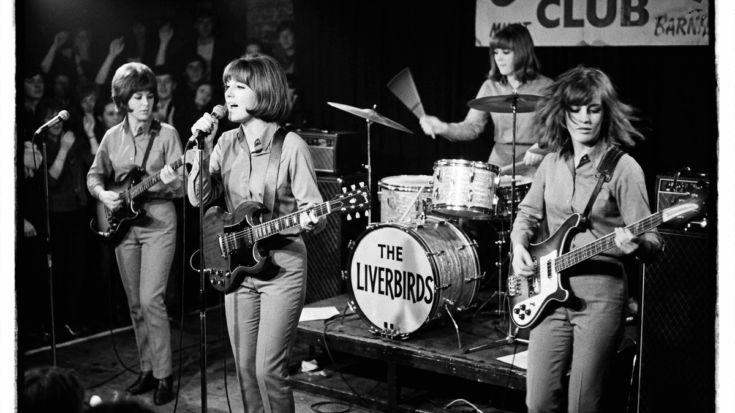
During the explosive rise of the British rock scene in the early 1960s, bands like The Beatles and The Rolling Stones dominated headlines. Yet quietly carving their own path in the same musical landscape was The Liverbirds—a groundbreaking all-female group that challenged the male-dominated norms of rock ’n’ roll.
Comprised of guitarists Valerie Gell and Pamela Birch, bassist Mary McGlory, and drummer Sylvia Saunders, the band emerged from Liverpool’s vibrant Merseybeat scene with a gritty sound and undeniable stage presence. At a time when female musicians were rarely taken seriously in rock, the Liverbirds stood out as pioneers who refused to conform to industry expectations.
Breaking Barriers at the Cavern
One of the band’s earliest milestones came when they performed at Liverpool’s legendary The Cavern Club—the same venue that helped launch the careers of the Beatles.
“We were the very first all-female band to play at The Cavern,” McGlory recalled in a 2024 interview with Guitar World.
The group initially wondered how audiences—particularly female fans—would react to them. In the early ’60s, rock concerts were dominated by male performers, and the idea of women taking the stage as a rock band was almost unheard of.
“And we didn’t know how the female audience was gonna react to us because we thought maybe they might think, ‘Oh my gosh, they’re gonna take our boyfriends away from us,’ or, you know, the groupies might suppose, ‘Oh, they’re gonna get the first choice of the bands.’ And then we started playing, the girls started screaming just the way they did for the boys.”
The response proved that the band’s fears were unfounded. Instead of skepticism, they were met with the same kind of enthusiasm that greeted their male contemporaries.
Touring Europe and Earning Rock Royalty’s Respect
The Liverbirds quickly built a reputation as a powerful live act. They toured extensively throughout Europe and secured a residency at Hamburg’s famed Star-Club—a venue famous for hosting emerging British bands during the early days of the rock boom.
Their relentless touring schedule eventually took them as far as Japan, where they developed a devoted following before the band ultimately disbanded in 1968. Despite their international travels and growing fan base, widespread recognition in the United Kingdom remained elusive.
McGlory later reflected on a memorable encounter with Charlie Watts roughly a decade ago, recalling how respected the band had been among their musical peers.
“I met Charlie Watts about 10 years ago,” she said. “We played with the Rolling Stones when we were still in England. And when he found out who I was, he said, ‘You know, Mary, Bill Wyman and I, we always said, we wonder what happened to them fantastic girls. We never heard of them again in England.’”
According to McGlory, many musicians—including members of the Stones and later bands such as The Kinks—recognized the band’s unique energy and talent.
“So you know, even people like The Stones, or later on The Kinks. They all really liked us and thought that we had something special,” she said. “And we’ve only just realized ourselves now how special we were because we had no other girls who we could look up to and say, ‘Well, let’s try and be like them.’ We had to be like ourselves.”
A Legacy Finally Receiving Its Due
For decades, the Liverbirds remained a largely overlooked chapter in rock history. However, renewed interest in the contributions of women to the genre has begun to shine a long-overdue spotlight on the group’s legacy.
McGlory revisited the band’s story in her 2024 memoir, The Liverbirds: Our Life in Britain’s First Female Rock ‘n’ Roll Band. Liverpool also paid tribute to the group through a stage production titled Girls Don’t Play Guitars—a title inspired by John Lennon’s reportedly skeptical reaction when he first encountered the band.
The production revealed just how influential the Liverbirds’ story remains for younger generations of musicians.
“We realized when the musical was on in Liverpool, how many young girls came up to us when we were signing autographs at the end, and said, ‘I’m gonna go home now and get a guitar. I’ve never even realized it. But it’s right. We girls have to start doing this,’” McGlory said.
Their story now stands as an important reminder that the history of rock music includes far more pioneers than the usual household names. Long before female rock bands became more common, the Liverbirds were already proving that women could command the stage with the same power, attitude, and musicianship as anyone else. In many ways, they helped lay the groundwork for future generations of female rock artists—from the trailblazing 1970s group Fanny to countless women who would later redefine the possibilities of rock music.