





Scientists Name a Triceratops Skull After Ozzy Osbourne
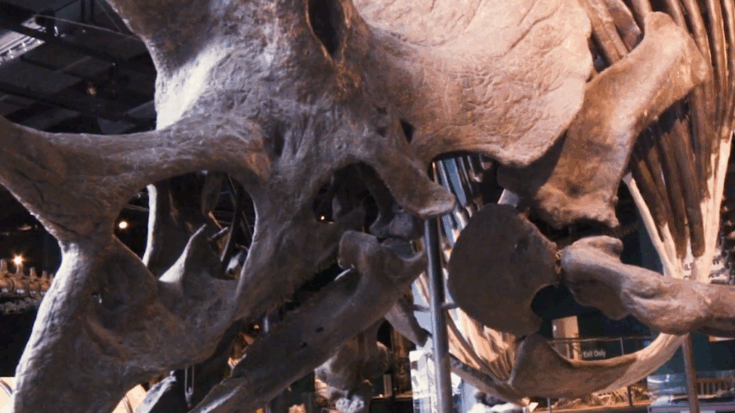
via Science Museum of Minnesota / Youtube
The fossilized remains of a striking Triceratops skull have been named in honor of Ozzy Osbourne, cementing the late heavy metal icon’s legacy in an unexpected corner of natural history. Dating back to the Late Cretaceous period, approximately 68–66 million years ago, the skull will go on public display later this month at the Tucson Gem & Mineral Show, the annual, multi-venue event held across the Arizona city.
Discovered in Montana’s famed Hell Creek Formation, the skull underwent extensive restoration at Italy’s Geoworld Paleontological Laboratory. The work was completed shortly after Osbourne’s death in July last year, after which the fossil was officially named “Ozzy.” The idea came from Vladislav Shabalin, creator of Fossils Of The Rock, a Led Zeppelin-themed exhibition of fossil art developed at the laboratory. Shabalin, who was born in Russia, attended the 1989 Moscow Peace Festival, where Osbourne performed during a landmark moment in rock history.
Horns, Symbolism, and Heavy Metal
In explaining the tribute, the laboratory drew a direct line between the dinosaur’s anatomy and rock culture itself.
“The fossilised Triceratops skull (the scientific term Triceratops, from ancient Greek, literally means ‘three-horned face’) instantly evokes the gesture of the horns,” the lab stated. “Having ancient origins and different meanings… the ‘Horned Hand’ is a recognized symbol in rock culture and in line with the mystical themes of the music of Black Sabbath: at their concerts, thousands of raised horned hands paid homage to the band and expressed unity and belonging.”
Though herbivorous, the Triceratops was no passive giant. Armed with powerful horns and a massive bony frill, it was capable of defending itself against apex predators such as Tyrannosaurus rex. “Like a fantastic beast sprung from Dante’s Inferno or born from Goya’s nightmares,” the lab added, “the mythical giant could well represent Osbourne, already a legend in his lifetime.”
A Legacy That Transcends Music
Osbourne’s impact, however, has never been confined to records, stages, or genres. A charismatic performer known for his eccentric style, theatrical flair, and genre-defining songs, the artist, famously dubbed the “Prince of Darkness,” shaped heavy metal’s aesthetic, attitude, and mythology, inspiring generations of musicians and fans alike.
The Triceratops skull joins a growing list of unconventional tributes that reflect the breadth of Osbourne’s cultural reach. These include Ozzy the Bull, the towering mechanical bull installed at Birmingham’s New Street railway station; the tree frog Dendropsophus ozzyi, named for its bat-like call; and the microbe Metallosphaera ozzyi, recognized for its ability to survive in extreme, almost “metal” environments.
Taken together, these honors underline how Osbourne’s influence extends far beyond music journalism or rock history. Whether in science, public art, or paleontology, his name continues to resonate—proof that the legacy of a true rock icon can echo not only through amplifiers and arenas, but across time itself.