


How Lemmy’s Lack of Experience Helped Turn Him Into a Bass Legend
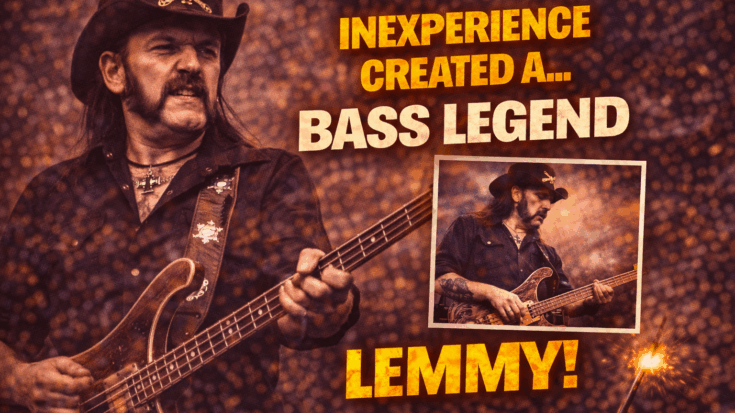
At the core of rock history’s loudest and most uncompromising figures stands Lemmy Kilmister, a musician whose reputation was forged less in studios than under stage lights. While Lemmy is often remembered for his image, attitude, and volume, his most enduring legacy may be his mastery of live performance and the unconventional way he approached the bass guitar.
The Bass as a Rhythmic Engine
Every great rock song depends on momentum. Melody may catch the ear, but rhythm carries the song forward, and that responsibility often sits with bass or rhythm guitar. Though distinct instruments, their roles frequently overlap, and musicians who understand both tend to write songs with greater drive and cohesion.
Tom Petty offers a revealing parallel. Before becoming known as one of rock’s most reliable rhythm guitarists, Petty began his career on bass. While he ultimately moved away from the instrument, the lessons stayed with him. His guitar work emphasized groove, timing, and structure rather than flash.
“I guess, because I’d been a bass player, I wanted to play rhythm in a real solid way,” Petty once explained. “So our music is really based on that rhythm guitar, and everything else grows from there. If I’m showing the band a new song, it’s based on rhythm guitar, and they fill in around that. But I stick really closely to the groove with the instrument.”
That same philosophy would come to define Lemmy’s bass style—though his version was louder, dirtier, and far more aggressive.
Lemmy’s Guitar-Minded Bass Style
Although Lemmy was devoted to the bass guitar, he was often described as playing it like a rhythm guitarist. Instead of staying quietly in the background, his bass lines cut through the mix with distortion and force, locking songs into a relentless groove. This approach blurred traditional roles and helped redefine what bass could do in a hard rock band.
That sound became the backbone of both Hawkwind and Motörhead, turning each into a formidable live act. Audiences didn’t just attend their shows—they endured them, overwhelmed by volume, speed, and intensity. Lemmy believed that rock music was meant to be felt physically, and he committed to delivering that experience night after night.
Even as his health declined, Lemmy refused to step away from the stage. Touring wasn’t just part of the job; it was the craft itself.
Learning the Instrument in Front of an Audience
Motörhead drummer Mikkey Dee later reflected on the band’s final tour, describing how far Lemmy pushed himself to keep performing.
“Instead of arguing with Lemmy, trying to get him off the road, let’s just help him instead,” Dee said. “I remember shows where we had to adjust a lot of stuff, but I think we, and he, did fantastic. Our last show was December 7th in Berlin, and then a couple of weeks later, the man is gone. Trust me, me and Phil put in 150%, Lemmy must have put in 300% to get through the sets.”
That commitment makes sense when considering how Lemmy learned to play bass in the first place. Unlike many musicians, he didn’t study the instrument in isolation. He learned it the hard way—onstage, in real time, in front of paying crowds.
“When I first joined Hawkwind, I didn’t know how to play bass at all because I’d never played one before in my life,” Lemmy once admitted. “I learned on stage.”
What might sound reckless instead became formative. That trial-by-fire approach shaped his aggressive, guitar-like bass style and reinforced his belief that rock music was about instinct, volume, and connection rather than perfection. Lemmy didn’t polish his playing away from the audience—he evolved with them watching. In doing so, he proved that sometimes the most enduring musical voices aren’t born from formal training, but from raw experience, relentless touring, and an unshakable commitment to the stage.