




David Byrne’s Surprising Claim About London

For decades, fans of Talking Heads have understood one thing clearly: David Byrne rarely approaches music the way anyone else does. His career has been defined by curiosity, experimentation, and a willingness to explore ideas that sit far outside the conventions of mainstream rock.
Plenty of legendary artists have carved out distinctive identities over the years, but Byrne’s appeal lies in his refusal to settle into predictability. Whether performing with Talking Heads or pursuing solo work, his creative decisions have consistently felt driven by artistic instinct rather than commercial calculation. The result is a body of work that often surprises listeners while still maintaining the unmistakable qualities that define Byrne’s voice.
That balance between familiarity and unpredictability has become one of the most enduring features of his career.
Finding a Voice Between the Literal and the Strange
Byrne’s lyrical style—often hovering somewhere between the literal and the surreal—did not appear fully formed. It gradually developed during the early years of Talking Heads as the band experimented with ways to merge each member’s strengths into a cohesive sound.
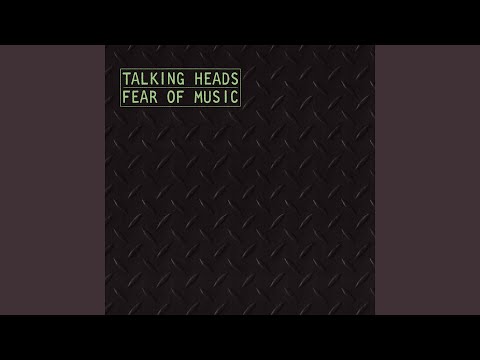
By the time the group began work on Fear of Music, those ideas had begun to crystallize. The 1979 album marked a turning point not just for the band’s sonic direction, but also for Byrne’s approach to songwriting. His lyrics began to lean more heavily into fragmented observations, abstract imagery, and a stream-of-consciousness style that reflected the restless energy of modern urban life.
At the center of this transformation was Byrne’s growing partnership with producer Brian Eno. Known for his unconventional studio techniques, Eno encouraged Byrne to lean into the strange impulses that defined his writing rather than trying to smooth them out.
Brian Eno’s Unusual Cure for Writer’s Block
Eno’s influence on Byrne extended beyond sound design. During the Fear of Music sessions, he also helped Byrne overcome a bout of writer’s block using a surprisingly simple exercise.
Rather than forcing fully formed lyrics, Eno asked Byrne to write down random words that came to mind. Those scattered fragments eventually evolved into several song titles, including “Mind,” “Paper,” “Air,” and “Cities.”
The approach was perfectly suited to Byrne’s creative instincts. Instead of writing traditional narratives, he built songs from impressions and observations—capturing the strange emotional responses people often have to the places and environments around them.
Within those tracks, Byrne explored feelings of unease, fascination, and alienation that can emerge when navigating unfamiliar spaces. His lyrics rarely described cities in straightforward terms; instead, they captured the psychological experience of being inside them.
Reimagining London in “Cities”
One of the clearest examples appears in Cities, where Byrne famously refers to London as a “small city.” At first glance, the description seems puzzling, especially given London’s massive global stature.
But the song isn’t concerned with geography. Instead, it follows a character searching for the right city to call home, describing London as “dark in the daytime” and a place where “people sleep in the daytime.” Byrne’s label of “small city” reflects a different perspective entirely—one shaped by the social patterns that define urban life.
From an outsider’s viewpoint, London can feel less like one enormous metropolis and more like a patchwork of neighborhoods, each operating almost as its own contained world. Byrne later explained this idea in an interview with Uncut, saying, “I think I meant that it was made up of lots of small villages, and people sometimes never ventured out of their little village.”
Seen through that lens, the lyric becomes less about scale and more about human behavior. Even the largest cities can feel strangely small when people remain within their familiar circles, rarely crossing into the countless other communities that exist just beyond their routine. It’s a subtle observation—one that reflects Byrne’s lifelong fascination with the quiet oddities of everyday life.
And that perspective may be exactly why his work continues to resonate. Byrne doesn’t simply describe the world as it appears; he reframes it, inviting listeners to see familiar places in ways they might never have considered before.