




Country Joe McDonald, Voice of Woodstock Protest Rock, Dead at 82
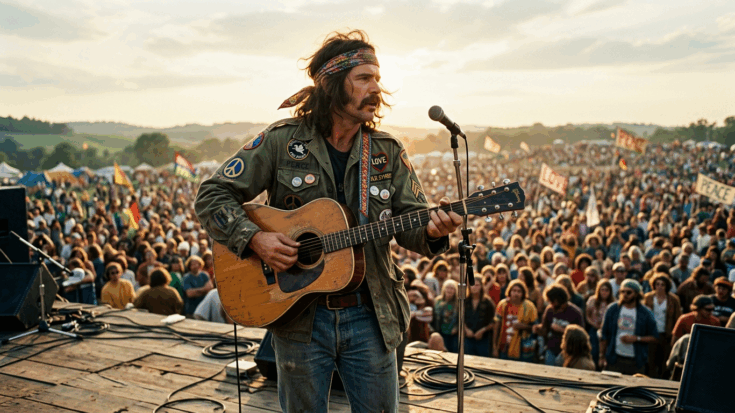
Country Joe McDonald, the singer, songwriter, and activist who helped define the sound and spirit of 1960s counterculture as the frontman of Country Joe and the Fish, has died at the age of 84.
“We are deeply saddened to report the passing of Country Joe McDonald, who died yesterday, March 7th, at the age of 84, in Berkeley, California, due to complications from Parkinson’s Disease,” read a statement posted on the band’s official Facebook page. “He was surrounded by his family.”
McDonald’s passing marks the end of a career that intertwined music, protest, and the cultural upheaval of a generation.
From Washington, D.C. to the Heart of the Counterculture
Joseph Allen McDonald was born in Washington, D.C., but spent much of his youth growing up in Southern California. After serving in the U.S. Navy, he relocated to the San Francisco Bay Area in 1965—arriving at a time when the region was becoming the epicenter of a rapidly evolving cultural movement.
It was there that McDonald co-founded Country Joe and the Fish with guitarist Barry “The Fish” Melton. The band quickly carved out a distinct musical identity, blending psychedelic rock with folk influences while channeling the political urgency of the era.
Their songs openly confronted the Vietnam War and embraced the ideals of the hippie movement. Through sharp satire and bold lyrics, Country Joe and the Fish became one of the defining voices of the counterculture, speaking directly to a generation questioning authority, war, and social conventions.
Albums That Captured the Spirit of the ’60s
The band released its debut album, Electric Music for the Mind and Body, in May 1967, a record that helped establish the psychedelic sound of San Francisco’s thriving music scene. Just six months later, they followed it with their second album, I-Feel-Like-I’m-Fixin’-to-Die.
Two songs from that album—“I-Feel-Like-I’m-Fixin’-to-Die Rag” and “The Fish Cheer”—would become permanently linked to one of the most iconic music festivals in history.
When Country Joe and the Fish performed at Woodstock in 1969, McDonald delivered a moment that would become legendary. During the performance, he led the massive crowd in a call-and-response chant, spelling out each letter of the f-word and asking the audience, “What does that spell?” Thousands of festivalgoers shouted the answer back in unison.
The performance perfectly captured the rebellious mood of the era.
“I-Feel-Like-I’m-Fixin’-to-Die Rag,” with its biting and unforgettable chorus—“One, two, three, what are we fighting for?”—became one of the most recognizable protest songs of the decade.
McDonald later reflected on the song’s origins in an interview with The New York Times. He explained that he was “inspired to write a song about how soldiers have no choice in the matter, but to follow orders, but with the irreverence of rock n’ roll. It was essentially punk rock before punk existed.”
A Long Career Beyond Woodstock
Country Joe and the Fish disbanded in 1971, only two years after their Woodstock appearance. Though the band reunited occasionally and released a final album, Reunion, in 1977, McDonald continued to build a prolific solo career.
Across more than five decades, he released 20 studio albums along with numerous live recordings, continuing to write and perform music that reflected his social awareness and storytelling instincts. His work often blended folk traditions with the same political consciousness that defined his early career.
According to Setlist.fm, McDonald’s final live performance took place in 2019 at San Francisco’s Golden Gate Park—an appropriate setting in the city where his career first took flight during the Summer of Love.
While many artists from the 1960s are remembered primarily for their music, McDonald’s legacy extends beyond the stage. He stood at the intersection of art and activism, using humor, satire, and sharp songwriting to challenge war and authority at a time when music was becoming a powerful vehicle for protest.
For many fans and historians of rock music, Country Joe McDonald will always be remembered as one of the voices that captured the restless energy of a generation—an artist who helped turn the soundtrack of the 1960s into a rallying cry for change.