Bob Dylan Dreamed of Writing 100 Songs With This Artist
via "BDM" / Youtube
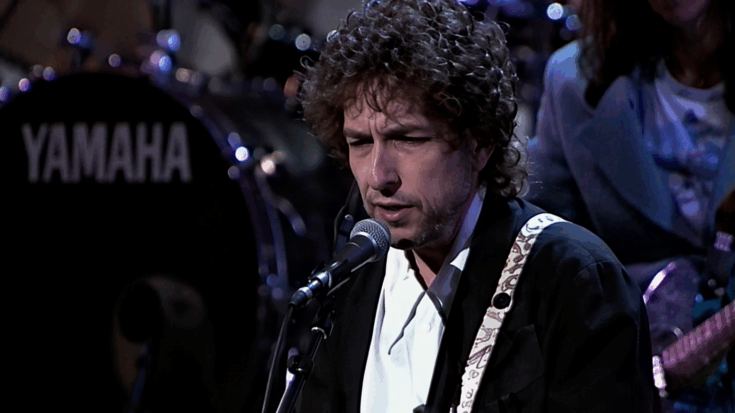
For much of his career, Bob Dylan has not appeared to be an artist reliant on co-writers. As one of the defining songwriters of the 20th century, his catalog stands firmly on its own, and the notion of contributing to his creative process could feel intimidating even for experienced musicians. Still, Dylan has long thrived on subverting expectations, occasionally entering collaborations that catch both fans and peers off guard.
He has always possessed a strong instinct for what might resonate with his audience, rarely pursuing partnerships that feel forced or mismatched. Yet, he has remained open to working with those who share a similar creative wavelength—even if they come from outside the traditional music world. Many of Dylan’s influences, after all, stem from poetry rather than conventional songwriting.
Poetry, Peers, and Parallel Voices
While Dylan emerged as one of the most distinctive voices in popular music, his artistic sensibility often aligned more closely with poets—writers capable of distilling emotion without relying on melody. His own work reflects that approach, combining vivid lyrical imagery with musical structure.
Within rock, a handful of contemporaries demonstrated comparable strengths. Patti Smith, despite an initially strained relationship with Dylan, evolved into one of the genre’s most respected poet-performers. Meanwhile, Bernie Taupin built a career on crafting evocative lyrics that perfectly complemented the melodic instincts of Elton John. Together, they represent a lineage of lyric-driven artistry that parallels Dylan’s own approach.
A Meeting of Minds with Robert Hunter
Dylan found a particularly natural collaborator in Robert Hunter during the creation of Together Through Life. Known for his work with the Grateful Dead, Hunter possessed a lyrical sensibility that aligned seamlessly with Dylan’s own. Their partnership felt less like a formal collaboration and more like a shared creative language unfolding in real time.
Reflecting on their work together, Dylan suggested that they could have written countless songs under the right circumstances, pointing to a deep mutual respect and a shared commitment to a different standard of songwriting than what dominated the contemporary landscape. He said:
“Hunter is an old buddy. We could probably write a hundred songs together if we thought it was important or the right reasons were there.. He’s got a way with words, and I do too. We both write a different type of song than what passes today for songwriting.”
The collaboration was never geared toward chart success, but it carried echoes of Dylan’s earlier work while continuing to evolve. Albums like Time Out of Mind had already introduced a more wandering, introspective style, and Together Through Life extended that trajectory. Even when not every track landed perfectly, the project underscored Dylan’s enduring search for new forms of expression.
That creative exchange may have left a lasting imprint. In later years, songs like “Murder Most Foul” point to an artist still pushing his boundaries—possibly shaped, in part, by the insights gained from working with Hunter. While Dylan has always drawn deeply from personal experience, collaboration offered him another lens, expanding the possibilities of what his songwriting could become.