




Neil Young Admits One Performance He Regrets
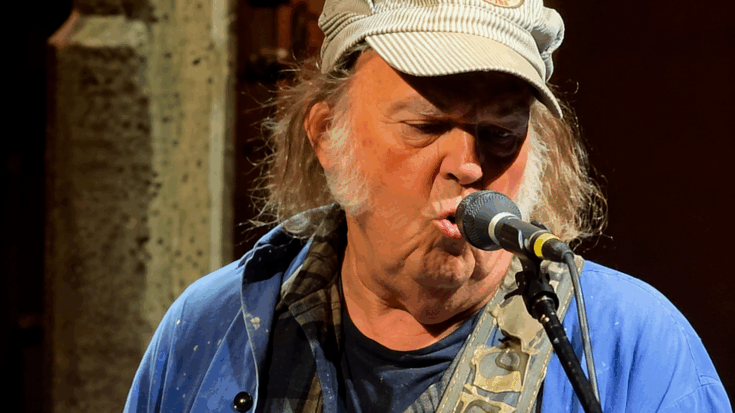
via "MusicVault" / Youtube
Neil Young has long built his career on a refusal to conform. Across decades of releases—ranging from universally acclaimed classics to more divisive efforts—he has maintained a singular approach: present the music as it is, without compromise or apology. If audiences didn’t connect, that was never his concern.
Yet behind that unwavering artistic identity were moments of instability. Even during the making of some of his most celebrated works, Young has acknowledged that he wasn’t always in the clearest headspace. His creative peaks often coincided with personal struggles, revealing a tension between inspiration and emotional turmoil that would define much of his output in the 1970s.
Grief, Excess, and the Weight of the ’70s
The emotional core of Tonight’s the Night stands as one of the starkest examples of that tension. The album’s raw, almost confrontational tone was shaped by tragedy—most notably the death of guitarist Danny Whitten. While the record is widely regarded as one of Young’s finest, he later suggested he would have traded its existence for the chance to help Whitten before his passing.
In the aftermath, Young’s own habits reflected the chaos of the era. The 1970s were defined by excess throughout the music industry, and his rise coincided with a lifestyle that often included heavy substance use. While this didn’t always diminish the quality of his studio work, it became far more visible in live settings—most notably during his appearance at The Last Waltz.
Sharing the stage with legends like Joni Mitchell and Eric Clapton, Young delivered moments of undeniable musical chemistry, particularly in his harmonies with Mitchell. However, his condition that night left a lasting impression for different reasons. Reflecting on the performance, he admitted:
“I was fried for The Last Waltz. I was on my way out, falling onstage, and someone said, ‘Here, have some of this.’ I’d been up for two days, so I had some. And I was gone, you know? I’m not proud of it; I don’t think people should see that and think, ‘Wow, that’s cool.’”
A Bittersweet Farewell—and a Turning Point
The concert itself carried an undercurrent of fragility. While the lineup was filled with iconic collaborators, not everything went smoothly—Clapton notably cut a solo short when his guitar strap failed mid-song. Still, The Band proved why they were so revered. Their ability to adapt in real time, honed during their years backing Bob Dylan, allowed them to maintain the performance’s momentum.
That adaptability gave The Last Waltz its emotional resonance. As one chapter closed, performances of songs like “The Weight” carried a sense of finality—both celebratory and melancholic. It was a farewell not just to a band, but to an era defined by excess, experimentation, and unpredictability.
For Young, the night served as more than just a performance—it was a reckoning. Though he didn’t immediately abandon the lifestyle that had contributed to that moment, he recognized the need for change. The experience became a wake-up call, prompting him to be more conscious of his onstage presence and the image he projected. In a career built on raw honesty, it was one of the rare moments where reflection led to restraint.