




3 Legendary British Rock Bands That Never Truly Broke Through in the U.S.
via SameMarcChannel / Youtube
Americans have long welcomed musical “invasions,” especially when they arrive dressed sharply, armed with guitars, and packed with irresistible songs. The Beatles, The Rolling Stones, and The Who all borrowed heavily from American roots music, but their distinctly British sensibilities gave that sound a fresh, exotic edge. Still, transatlantic success has never been guaranteed. For every British band that conquered the U.S., many others found the market indifferent. These groups often filled arenas or stadiums at home, only to settle for opening slots or modest club tours while attempting to crack the sprawling American landscape.
In that long history of near misses, a few names stand out—not for a lack of influence or acclaim, but for how sharply their U.S. fortunes contrasted with their stature in the U.K. Here are three legendary British rock bands that never truly broke big in America.
The Jam
The Jam were hardly invisible in the United States, but the mod revivalists never achieved the commercial breakthroughs enjoyed by first-wave punk peers like The Clash or the Sex Pistols. In Britain, however, the band was generational spokesmen. Songs such as “Town Called Malice,” “That’s Entertainment,” and “Going Underground” became working-class youth anthems, capturing everyday frustration with sharp melodies and pointed social observation. Their influence later echoed loudly through Britpop.
American tours told a different story. The Jam typically appeared as a support act rather than headliners, a stark contrast to their superstar status at home. That imbalance was made unmistakably clear in 1982, when the band split up, and Polydor Records reissued all 16 of their U.K. singles. Every single one reentered the British charts simultaneously—an almost unheard-of feat that underscored just how deeply embedded The Jam were in the U.K.’s cultural fabric, even as the U.S. remained largely unmoved.

Suede
When Suede crossed the Atlantic in the early 1990s, American audiences seemed unsure what to make of them. Frontman Brett Anderson’s androgynous glamour—swinging hips, camp theatricality, and a bare midriff—clashed with a U.S. rock climate still dominated by grunge’s flannel-clad introspection. Matters grew more complicated when a trademark dispute forced the band to release their records in America under the name The London Suede, diluting their identity at a crucial moment.
Yet Suede’s importance is difficult to overstate. Anderson was a catalyst for Britpop, and the band’s early success directly inspired Damon Albarn to rethink Blur’s direction. Their first three albums—Suede, Dog Man Star, and Coming Up—are now considered Britpop essentials. “Animal Nitrate,” in particular, functions as a manifesto for the movement, often described as Britpop’s “Smells Like Teen Spirit.” While the U.S. never fully embraced them, Suede helped define a sound and attitude that dominated British music throughout the decade.

T. Rex
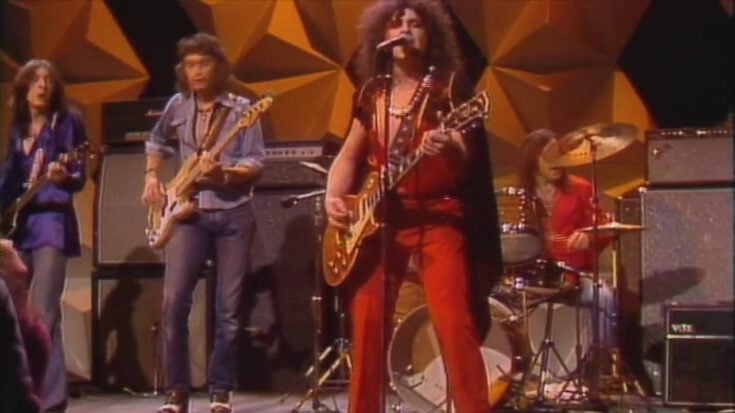
T. Rex occupies an even stranger position in the transatlantic story. When Suede began work on Coming Up, Anderson reportedly used T. Rex’s 1973 album Tanx as a guiding reference. That record, a sleek fusion of glam rock and soul, reached the U.K. top 10 but stalled at a modest 102 in the United States. American listeners largely know the band through “Get It On” and “20th Century Boy,” yet even their biggest U.S. hit was retitled “Bang A Gong (Get It On)” to avoid confusion with a similarly named jazz-rock track.
The irony is that Marc Bolan’s influence on rock music far outweighs his American chart performance. In Britain, he was a phenomenon—an artist who reshaped pop stardom through glitter, swagger, and unapologetic flamboyance. He directly inspired David Bowie and effectively laid the groundwork for glam rock, a genre whose DNA can be traced through punk, new wave, Britpop, and even modern indie. T. Rex’s limited U.S. success ultimately says less about the band and more about timing, marketing, and cultural translation. Their legacy endures not in chart positions but in the countless artists who borrowed Bolan’s sparkle, attitude, and belief that rock music could be both primal and glamorous at the same time.