





The Van Halen Song Sammy Hagar Says He “Punished” Himself With
Not every album cycle unfolds as a triumph of inspiration. Even for veteran artists, the studio can become a place of stagnation, self-doubt, and mounting pressure. During one of Van Halen’s most challenging recording periods, Sammy Hagar found himself confronting a creative and emotional crisis that pushed him further than he had ever gone before.
Tension in the studio was nothing new for Van Halen. During the David Lee Roth era, recording sessions were often shaped by sharp creative disagreements, particularly between Roth and Eddie Van Halen. Those conflicts famously left their mark on major releases, including 1984, where compromise was as much a part of the process as creativity.
A New Singer, Familiar Pressure
When Roth departed, Hagar initially appeared to be the perfect solution. Introduced to the band through a casual jam—famously recommended by Eddie Van Halen’s mechanic—Hagar helped launch a commercially successful new chapter. His debut album with the group, 5150, delivered chart-topping hits and signaled a smoother, more melodic direction.
That momentum, however, proved difficult to sustain. The follow-up record, OU812, leaned heavily on keyboards and marked the band’s first largely self-produced effort. Without an outside producer to serve as a mediator, ideas lingered, arrangements expanded, and creative decisions became harder to finalize. What once manifested as interpersonal friction has now become a grinding battle with the process itself.
Writing Without a Safety Net
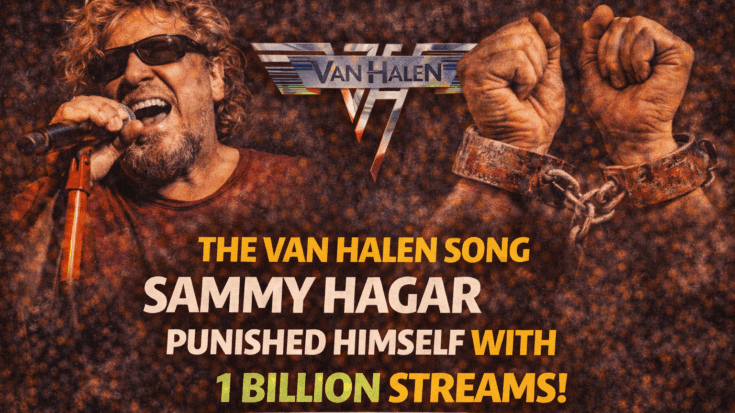
One song in particular, “Mine All Mine,” became a personal ordeal for Hagar. Known for writing lyrics instinctively, he struggled to adapt to an environment where Eddie Van Halen continually refined riffs and layered new ideas. Instead of responding to a finished piece of music, Hagar was forced to chase something that kept shifting.
The pressure mounted quickly. As Eddie’s musical ideas flowed freely, Hagar found himself rewriting lyrics again and again, internalizing every setback. He later admitted just how destructive the process became:
“That wasn’t a magical moment, but it was the first time in my life I ever beat myself up, hurt myself, punished myself, practically threw things through windows, trying to write the lyrics. I went through it, I rewrote that song lyrically seven times. And it was the last song I did vocals on for the record.”
Even after entering the vocal booth, Hagar remained unconvinced, sometimes refusing to sing the track because of his dissatisfaction. Yet the finished recording featured layered harmonies that showcased his melodic strengths, supported by Michael Anthony’s soaring falsetto.
Pain Before the Payoff
Although OU812 proved a difficult chapter, it was not the end of the road. Van Halen would later regain their footing with For Unlawful Carnal Knowledge and the hit single “Right Now.” In hindsight, Hagar’s experience stands as a stark reminder that even established artists can be pushed to their limits—and that enduring creative pain is sometimes the price of producing work that ultimately resonates.