The Amazing Trick Nils Lofgren Brought to Bruce Springsteen’s Band
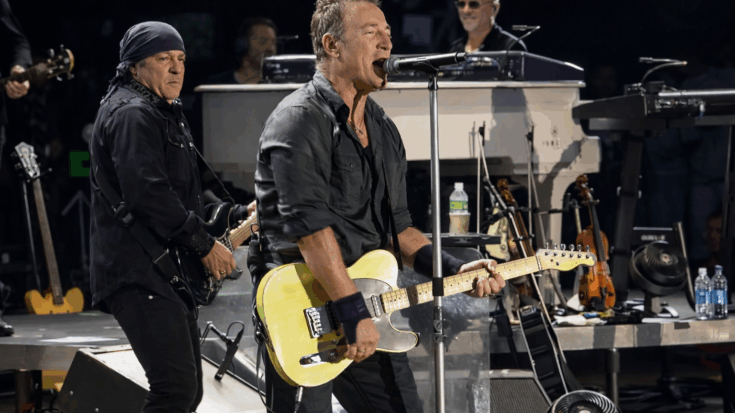
via "Front Row Music" / Youtube
From the earliest days of rock and roll, live performance has thrived on a mix of musicality and spectacle. Artists have consistently pushed the boundaries of stagecraft, using bold, often outrageous gestures to leave lasting impressions. Whether it was Jimi Hendrix coaxing notes from his guitar with his teeth or James Brown electrifying crowds with gravity-defying splits, these moments became part of rock’s mythology—equal parts sound and showmanship.
Showmanship vs. Subtlety
Yet not every artist has embraced theatrical excess. For some, the music itself remains the sole centerpiece. It’s nearly impossible to imagine Bob Dylan indulging in knee slides or Joni Mitchell smashing her guitar in a climactic display of destruction. Their restraint, however, has never translated to dullness. Instead, it underscores a different kind of magnetism—one rooted in songwriting, presence, and emotional resonance rather than visual spectacle.
Still, there exists a spectrum between understated performance and full-blown theatrics. Some artists inject just enough flair to energize a crowd, while others blur the line between musician and performer in a more physical sense, incorporating athleticism into their craft.
Enter Nils Lofgren: Musician and Acrobat
Bruce Springsteen has long occupied a middle ground. Known for marathon sets and relentless energy, “The Boss” prioritizes the music while delivering performances that feel anything but restrained. That dynamic took on a new dimension in 1984 when Steven Van Zandt temporarily stepped away from the E Street Band, making room for guitarist Nils Lofgren.
Lofgren was already widely respected for his virtuosic playing, but his talents extended far beyond the fretboard. As a child, he was a competitive gymnast, earning trophies for his flips and tumbling routines. His parallel passions for music and acrobatics even inspired the title of his 1985 solo album, Flip.
By the 1970s, Lofgren had developed a distinctive stage persona, often incorporating a trampoline into his performances. In a move that seemed almost surreal, he would execute backflips mid-song while continuing to play guitar—an act that fused technical musicianship with physical daring.
A Stunt Retired, A Legacy Intact
When Lofgren joined Springsteen on the Born in the U.S.A. tour, he brought that same high-flying energy to one of rock’s biggest stages. During the midsection of “Rosalita,” as Springsteen introduced the band, Lofgren would launch into one of his signature backflips off a trampoline—an unforgettable moment that elevated the show’s sense of occasion.
However, about 65 shows into the tour, the stunt was quietly shelved. Lofgren later recalled the conversation that led to its removal: “I remember one late night after a gig on a plane flight somewhere in the US, Bruce told me he was probably going to pull ‘Rosy’ from the set for a while and asked me if I’d miss doing the flip bit.”
Though the decision marked the end of a crowd-pleasing highlight, Lofgren accepted it with perspective. “Thinking about it, I realised it would be a relief not to have that crazy stunt in the back of my mind during the show,” he said.
Looking back, Lofgren offered a more reflective—and slightly tongue-in-cheek—assessment of the stunt’s place in a performance.
“It’s a good bit that really shouldn’t be done early in any show when you’re fresh, strong, and in most cases, dry! No, you gotta do it late in the night, or in the case of my shows, as a finale, when you’re dripping sweat, exhausted and crazed, preferably delirious from a great night of performing music in front of a fired up crowd, equilibrium a bit hazy.”
In hindsight, the removal of the stunt speaks to a broader truth about Springsteen’s philosophy: the show may be dynamic, even explosive, but it is always anchored in the music. Lofgren’s acrobatics, while undeniably thrilling, risked becoming a focal point that could overshadow the collective power of the band. By scaling things back, the performance returned to its emotional core—songs, storytelling, and connection.
Even without the flips, Lofgren’s presence remained vital. His energy, musicianship, and willingness to push boundaries still contributed to the band’s legendary live reputation. And perhaps that’s the enduring lesson: in rock and roll, spectacle can amplify a moment, but it’s the music that ultimately sustains it.