




The Album Bob Dylan Said He Was Forced to Make
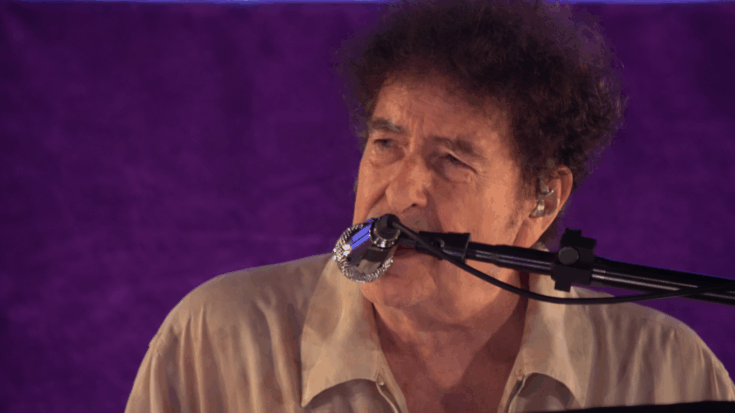
via "imfirstamongequals4509" / Youtube
At a time when the music industry increasingly relied on formulas and market expectations, Bob Dylan stood apart as an artist unwilling to be shaped by anything but his own instincts. His career would become a case study in creative independence, defined as much by what he rejected as what he embraced. No one was ever going to dictate how Bob Dylan made his records. From the outset, his relationship with the music industry operated on his terms alone.
Though he brushed against chart success in the 1960s, Dylan never fully embraced the role of a conventional hitmaker. Instead, he followed his own creative instincts, crafting songs that reflected his inner world rather than the expectations of a mass audience. Commercial appeal was secondary—sometimes irrelevant. Even then, Dylan was selective about what deserved to be released, often leaving recordings behind if they didn’t meet his personal standard or current state of mind.
That approach extended even to songs that would later be considered classics. Tracks like “Tangled Up in Blue” were never static; they evolved continuously. Dylan frequently revised lyrics in performance, reshaping them to align with his present outlook rather than preserving their original form. For him, a song was never finished—it simply existed in whatever form it took at a given moment.
A Living, Breathing Songbook
Dylan’s refusal to remain fixed became most visible onstage. His long-running Never Ending Tour transformed his catalog into something fluid and unpredictable—a living archive rather than a museum piece.
Audiences expecting faithful renditions of “Blowin’ in the Wind” or “Like a Rolling Stone” often encountered something else entirely: altered arrangements, reworked phrasing, and a voice that had grown rougher with time. Rather than revisit the past, Dylan reinterpreted it, sometimes to the frustration of fans seeking nostalgia, but always in service of artistic evolution.
In this sense, his approach mirrored that of David Bowie—another artist defined by reinvention. But where Bowie’s transformations were often theatrical and deliberate, Dylan’s shifts felt more instinctive, almost unavoidable. By the late 1980s, however, his creative identity had entered a new phase. His period of overtly evangelical songwriting had faded, yet he was still searching for direction beyond the folk and rock frameworks that had defined his earlier work.
Under the Red Sky hinted at uncertainty, receiving a lukewarm response. But what followed would reveal something far more compelling.
Reluctance, Revelation, and Late-Career Fire
Time Out of Mind emerged as one of Dylan’s most introspective works—arguably more revealing than he initially intended. Recorded during a period marked by health concerns, the album carries an undercurrent of vulnerability, its characters grappling with mortality, longing, and emotional fatigue.
Even so, Dylan himself was ambivalent about the material. Some songs, in his view, may not have been meant for public release at all. Reflecting on the sessions, he admitted:
“They gave me another contract, which I didn’t really want. I didn’t want to record anymore, I didn’t see any point to it, but lo and behold they made me an offer and it was hard to refuse. I’d worked with [Daniel] Lanois before, and I thought he might be able to bring that magic to this record. I thought, ‘Well, I’ll give it a try.’ There must have been twelve, fifteen musicians in that room – four drummers notwithstanding. I really don’t know how we got anything out of that.”
Despite his reluctance, the results spoke volumes. Songs like “To Make You Feel My Love” demonstrated a rare emotional clarity, while sprawling pieces like “Highlands” proved that Dylan was still capable of expansive, ambitious storytelling. Even late into his career, he continued chasing something intangible—that perfect line, that fleeting moment of truth.
Where many artists of his generation leaned into legacy and familiarity, Dylan resisted the comfort of repetition. He avoided becoming a nostalgia act, not out of defiance alone, but out of necessity. Reinvention wasn’t a strategy; it was a condition of his artistry.
In the end, Dylan’s refusal to stand still may be his most enduring statement. Rather than give audiences what they expect, he continues to offer something less predictable—and far more vital: a body of work that evolves in real time, shaped by an artist who never stopped searching, and never saw a reason to.