




Jason Bonham Still Keeps Led Zeppelin Music Alive
via "Martín 3261 Música" / Youtube
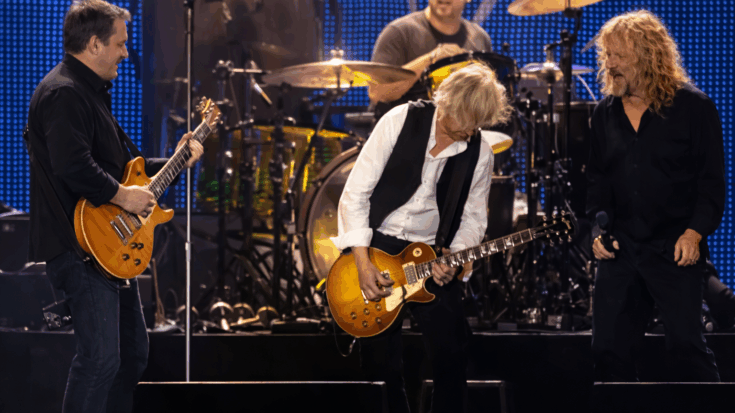
Jason Bonham, son of the late John Bonham and a longtime torchbearer of his father’s legacy, is preparing to take his Jason Bonham’s Led Zeppelin Evening tour to Australia with a renewed creative vision. Speaking with Today Extra, Bonham outlined how the run of shows will commemorate the 50th anniversary of Physical Graffiti by Led Zeppelin—but not in the way fans might expect.
“Fifteen years into paying homage to Dad, I wanted a challenge,” Bonham said. “Well, my favorite album was ‘Physical Graffiti’, so I went back and did some research and realized that some of the songs were actually recorded for ‘Led Zeppelin IV’, some of them were recorded for ‘Houses Of The Holy’. I always say, why wasn’t ‘Houses Of The Holy’ on ‘Houses Of The Holy’? So, part of the show — it’s more than just us playing the music.”
Rather than recreating the album in a straightforward, note-for-note fashion, Bonham is leaning into a more expansive format—one that reframes the material through context, history, and personal memory.
Stories from Inside the Bonham Legacy
What sets this tour apart is Bonham’s unique vantage point. Having grown up surrounded by members of Led Zeppelin, his recollections offer something closer to oral history than performance alone.
“I explain some of the things and what it was like being around them and growing up in the household of Bonham and getting to play with, of course, Robert [Plant], John [Paul Jones] and Jimmy [Page],” he continued.
The inclusion of these firsthand accounts adds a layer of intimacy rarely found in tribute shows. Bonham is not simply revisiting the music—he is contextualizing it, bridging the gap between myth and lived experience. For audiences, that means hearing familiar songs refracted through stories that only an insider could tell.
A Living, Breathing Setlist
Bonham also emphasized that the performances will remain fluid, designed to respond to the energy of the crowd rather than adhere to a rigid structure.
“It’s gonna be more than just the album,” he said. “And we couldn’t just go and play it the same way as the album. We wanna keep you entertained. We wanna keep you sat in your seat. We want to keep you standing up. So it’s a show, and we have some great stories in between and how things are put together.”
“And if the audiences are good, and they’re usually very, very good in Australia and New Zealand, so we can always throw in some surprises,” he added. “The main thing in the band is you have to know every song to be in the band, and we know every song. So just shout them out and we’ll play ’em.”
That adaptability underscores the band’s commitment to spontaneity—transforming each night into a distinct experience rather than a repeat performance.
Bonham’s upcoming tour arrives at a moment of renewed attention on Physical Graffiti, which celebrated its 50th anniversary in 2025 with a series of archival releases, including a live EP and an expanded deluxe vinyl edition. Long regarded as one of rock’s most ambitious double albums, its sprawling scope and genre-hopping identity continue to influence generations of musicians.
Yet Bonham’s project suggests that legacy is not only preserved through reissues and remasters—it is also reinterpreted onstage. By blending performance with personal narrative, he shifts the focus from preservation to evolution. For fans, this creates a rare dual perspective: the chance to revisit a canonical work while simultaneously seeing it reshaped through the eyes—and hands—of someone who inherited its history firsthand.