




Gene Simmons Issues Apology After Controversial Ace Frehley Comments
via CBS News / YouTube
Gene Simmons has walked back remarks he made about the late Ace Frehley, after an interview in which he suggested the former Kiss guitarist’s “bad decisions” contributed to his death. Frehley passed away in October from a brain bleed after tumbling down the stairs at his home in Morristown, New Jersey.
Speaking to the New York Post, Simmons said:
“He refused [advice] from people that cared about him – including yours truly – to try to change his lifestyle. In and out of bad decisions. Falling down the stairs – I’m not a doctor – doesn’t kill you. There may have been other issues, and it breaks my heart.”
He continued:
“The saddest thing… You reap what you shall sow, unfortunately.”
The comments quickly made the rounds online, triggering criticism from fans who felt the bassist’s timing was insensitive and unnecessarily harsh in the wake of Frehley’s passing.
Simmons Issues a Public Apology
Responding to the backlash, Simmons has now apologized for his choice of words. “On reflection, I was wrong for using the words I used,” he said. “I humbly apologise. My hand to God, I didn’t intend to hurt Ace or his legacy, but upon rereading my words, I see how it hurt everyone. Again, I apologise. I’ve always loved Ace. Always.”
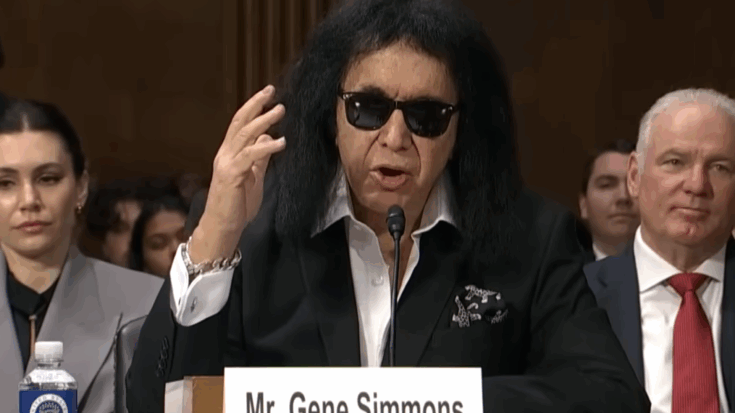
The controversy arrives in the midst of a high-profile week for the rocker. On Sunday, Simmons—along with fellow original Kiss members Paul Stanley and Peter Criss—was honored by President Trump during the Kennedy Center Honors ceremony. Two days later, he appeared before a Senate subcommittee to advocate for the American Music Fairness Act, which aims to guarantee that musicians are paid when their songs are played on the radio.
“If you are against this bill, you are un-American,” Simmons said during the hearing. “You cannot let this injustice continue. It looks like a small issue, but our emissaries to the world are Elvis and Frank Sinatra.”
Another Controversial Remark and a Larger Conversation
During the same hearing, Simmons ventured into further controversial territory, remarking, “And when they find out we’re not treating our stars right – in other words, worse than slaves; slaves get food and water. Elvis and Sinatra and Bing Crosby got nothing for their performance. You’ve got to change this now.”
The comment, predictably, has stirred additional criticism—raising questions not just about taste but about the way musicians are framed in larger cultural debates. While Simmons is no stranger to bluntness, the escalating reaction underscores how his words carry weight far beyond a single interview or hearing.
In the aftermath of Frehley’s death, many fans and musicians alike have been thinking about legacy—how artists are remembered, how their struggles are framed, and how the narratives built around them shape public memory. Simmons’ apology may not erase the sting of his earlier comments, but it adds a layer of complexity to a week in which he has been both celebrated and scrutinized.
And for many readers, it also serves as a reminder that conversations about artists—especially those who are no longer here to speak for themselves—demand not only honesty, but a measure of care rooted in respect for the music and the people behind it.