




Fleetwood Mac’s John McVie Sets the Record Straight on His Songwriting Role

via TropicalSpeed/ Youtube
John McVie has always been known as the quiet anchor of Fleetwood Mac — the guy who didn’t need the spotlight but could hold an entire song together with just a few notes on his bass. If there was a groove to build, he handled it. If there was a riff to carry the whole track, he was there. One of the most famous examples is the pulsing bass line in “The Chain,” a part many fans immediately recognize.
Even though Fleetwood Mac’s main songwriters were typically Lindsey Buckingham, Stevie Nicks, and Christine McVie, John found his way into the credits more often than people realize. Across the band’s long and winding history, he collected 10 songwriting credits, mostly tucked into deep cuts or special releases — but they’re absolutely worth rediscovering. Here’s a friendly, chronological walk through every song John McVie wrote or co-wrote for Fleetwood Mac, showing different sides of the bassist listeners rarely talk about.
“Searching for Madge”
Album: Then Play On (1969)
Fleetwood Mac’s Then Play On marked a turning point, pulling the band beyond its early blues foundation and into more experimental spaces. But “Searching for Madge,” written by John alone, still carries that raw, earthy blues identity the band was originally built on. It’s an instrumental track, loose and unpolished in a good way — the kind of jam where you can practically hear the musicians smiling while they play. It was an early hint that John had musical ideas beyond bass lines.

“On We Jam”
Album: Live in Boston (1985, recorded 1970)
“On We Jam” is another instrumental, but this one was a full-band collaboration. John co-wrote it with Mick Fleetwood, Peter Green, Danny Kirwan, and Jeremy Spencer during a Boston performance in 1970. The recording was shelved for years and didn’t get an actual release until 1985. It captures the band at its most unfiltered — no rules, no structure, just pure rock improvisation.

“Station Man”
Album: Kiln House (1970)
“Station Man” is a warm, country-blues style tune John cowrote with Kirwan and Spencer. Kirwan handled the lead vocals, and the track ended up being one of the album’s standout moments. Kiln House was an important transitional record for Fleetwood Mac: it was the last to feature Peter Green, and the first where Christine McVie began contributing art and musical support before officially joining. Around this time, John and Christine’s relationship also began to grow, eventually turning into the band’s most famous marriage.
Fans often recommend hunting down the live version featuring Pete Townshend — a fun, unexpected piece of rock history.

“Jewel Eyed Judy”
Album: Kiln House (1970)
Another Kiln House track with John’s name on the credits, “Jewel Eyed Judy”, was written by McVie, Fleetwood, and Kirwan. It’s a lively, guitar-driven song reportedly inspired by the band’s secretary, Judy Wong. The tune has an easygoing ‘70s charm, the kind that makes you imagine the group hanging out in a rehearsal room tossing ideas back and forth.

“The Purple Dancer”
Release: B-side to “Dragonfly” (1971)
In 1971, Fleetwood Mac released “Dragonfly,” their first single with Christine officially on board. John didn’t write that A-side, but he did help craft the B-side, “The Purple Dancer.” It’s a moody track with a psychedelic touch, and its rarity makes it a fun discovery for fans exploring the band’s lesser-known catalog.

“What a Shame”
Album: Future Games (1971)
“What a Shame” is a short but funky instrumental co-written by both McVies, Mick Fleetwood, Danny Kirwan, and the band’s newest member at the time, Bob Welch. Though brief, it packs a surprising amount of groove. It gives listeners a quick taste of what the group sounded like when they were simply experimenting, free from the pressure of pop radio expectations.

“Forever”
Album: Mystery to Me (1973)
Before Fleetwood Mac became the polished pop-rock machine most people know from the mid-70s, they spent several years shifting and shaping their identity. “Forever,” cowritten by John, Welch, and Bob Weston, shows the band in one of those creative phases. The track has a lightly reggae-influenced swing that sets it apart from most Fleetwood Mac songs. Weston rarely received writing credits with the group, making this collaboration even more unique.

“Jam #2”
Album: Fleetwood Mac (1975) – Expanded Edition (2004)
By 1975, the band had uprooted themselves from the U.K., moved to the United States, and added two new members: Lindsey Buckingham and Stevie Nicks. Their self-titled album became a massive success, but not every recording made the final release. “Jam #2,” added decades later on the expanded edition, is another instrumental built around John’s unmistakable groove. Even in a casual studio jam, his bass line drives the whole thing forward.

“The Chain”
Album: Rumours (1977)
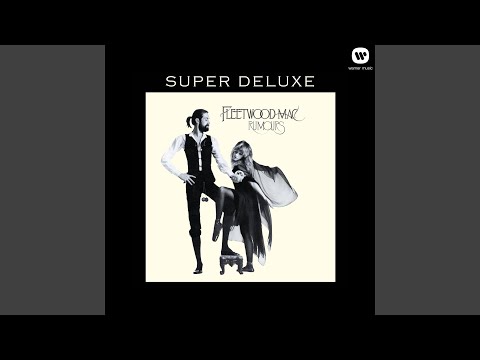
“The Chain” stands out as the only Fleetwood Mac track credited to all five classic-era members — Buckingham, Nicks, Christine McVie, John McVie, and Mick Fleetwood. Each musician contributed a piece, and together they created one of rock’s most iconic songs. John’s thunderous, steady, rising bass line near the end has become one of the most recognizable musical moments the band ever recorded. It’s a perfect example of how vital his presence was, even when he wasn’t writing lyrics or building the chords.

“For Duster (The Blues)”
Album: Rumours – Expanded Edition (2004)
The Rumours reissue also included “For Duster (The Blues),” another instrumental anchored by John’s deep, rolling bass. It offers a relaxed, bluesy feel and feels like a small window into the band’s behind-the-scenes jam sessions during one of the most chaotic recording periods in rock history.
John McVie may not have been Fleetwood Mac’s most prolific songwriter, but the songs he contributed — whether full compositions or spontaneous jams — reveal a musician with great instincts and a natural feel for rhythm. His writing credits may be few, but each one shows why he was the steady heartbeat of the band for decades.