




Bruce Springsteen Names the 1966 Song He’d Never Give Up
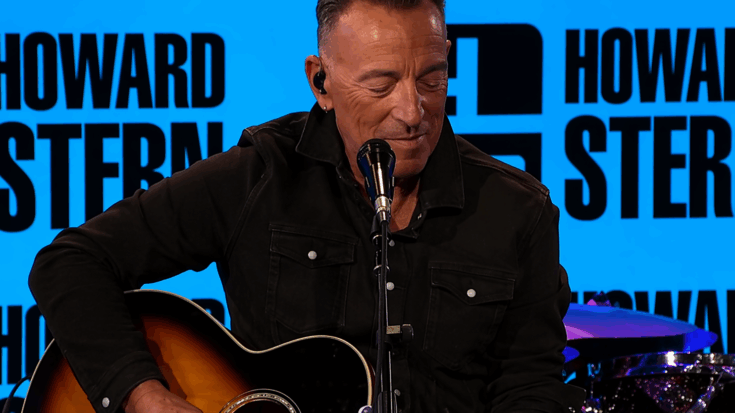
via "SongsbyBruce" / Youtube
In the early 1970s, Bruce Springsteen emerged as a defining voice of working-class America, shaping what would later be recognised as heartland rock. His songs captured the grit, hope, and quiet struggles of everyday life, setting him apart from many of his contemporaries.
His debut, Greetings from Asbury Park, N.J., failed to gain commercial traction, but Springsteen’s fortunes shifted dramatically with 1975’s Born to Run. The album’s success—peaking at number three on the Billboard 200—marked the arrival of an artist who would soon command arenas and define an era.
Carrying the Tradition Forward
As his career expanded, Springsteen became synonymous with marathon live performances and an unwavering connection to his audience. Yet beyond his own material, he consistently paid homage to the artists who shaped him. This dedication culminated in Only the Strong Survive, a full-length tribute to the soul classics he grew up admiring.
Reinterpreting songs has long been integral to Springsteen’s artistic identity. Before global fame, he was a student of American music, absorbing influences ranging from R&B to the smooth vocal traditions associated with Frank Sinatra. For Springsteen, performing covers was never merely nostalgic—it was a way of placing himself within a lineage of storytellers who translated emotion into song.
Sinatra’s Enduring Shadow
Springsteen’s admiration for Sinatra reflects a deeper creative kinship. While their musical styles differ, both artists built careers on embodying the emotional lives of their characters, exploring themes of loneliness, fleeting romance, and the quiet desperation of ordinary existence.
In 1995, Springsteen formally honoured Sinatra by inducting him into the Rock and Roll Hall of Fame. He later paid tribute again with a rendition of Angel Eyes, the Matt Dennis composition immortalised by Sinatra in 1958.
Still, one Sinatra recording stands above the rest for Springsteen. Speaking to Stephen Colbert, he revealed that “Summer Wind”—featured on the album Strangers in the Night—is the one track he could listen to indefinitely.
Springsteen’s reverence for Sinatra is rooted in a vivid childhood memory. He recalled, “My first recollection of Frank’s voice was coming out of a jukebox, it was in a dark bar on a Sunday afternoon when my mother and I went in searching for my father, and she said, ‘Listen to that… that’s Frank Sinatra, he’s from New Jersey.’”
Reflecting on the impact of that moment, he added:
“It was a voice filled with bad attitude, life, beauty, excitement, nasty sense of freedom, sex and a sad knowledge of the ways of the world.”
“It was the deep blueness of Frank’s voice that affected me the most, and while his music became synonymous with black tie, good life, the best booze, women, sophistication, his blues voice was always a sound of hard luck, and men late at night with the last ten dollars in their pockets trying to figure a way out.”
That sense of duality—polish on the surface, hardship underneath—would go on to shape Springsteen’s own artistic philosophy. Much like Sinatra, he understood that the most powerful performances are not defined by perfection, but by the emotional truths they carry. In Springsteen’s world, the characters inhabiting his songs—factory workers, dreamers, drifters—echo the same late-night vulnerability he first heard in Sinatra’s voice.
It is this shared emotional language that bridges the gap between two seemingly different artists. Where Sinatra delivered stories in tailored suits and dimly lit lounges, Springsteen translated similar sentiments into the language of highways, small towns, and restless youth. The connection runs deeper than influence; it is a continuation of a tradition, one that treats music not just as entertainment, but as a mirror of lived experience.