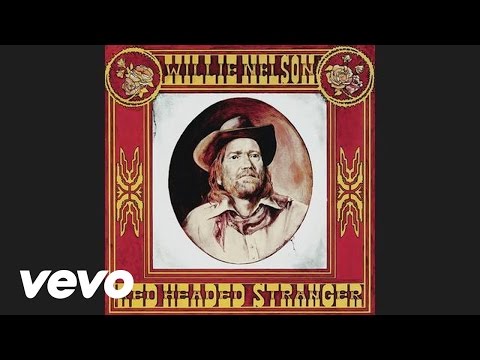





Willie Nelson’s 1975 No. 1 Album That Helped Shape the Outlaw Country Movement

via Willie Nelson / Youtube
In the winter of 1975, a quiet revolution was unfolding as Willie Nelson prepared to release an album that would challenge Nashville’s standards and transform his career. Red Headed Stranger was unlike anything dominating the radio at the time—a sparse, haunting project that defied the lush production style defining mainstream country. While its artistic daring was enough to turn heads, its impact would soon stretch far beyond stylistic disruption.
Today, Nelson stands as a towering figure in American music, widely regarded as a foundational force behind the Outlaw Country movement that redefined the genre throughout the 1970s. And it was Red Headed Stranger that signaled the beginning of the era in which Nelson’s full creative voice finally came into focus.
Breaking Away: Nelson’s Path to Creative Freedom
The story of Red Headed Stranger begins years earlier. Nelson spent much of his early recording life under RCA Victor, releasing a long catalogue shaped heavily by Nashville conventions. After the 1972 release of The Willie Way, he walked away from the label and signed with Atlantic Records, where he recorded the critically admired Shotgun Willie and Phases and Stages.
While both albums performed well, Nelson still felt boxed in by industry expectations. After more than a decade in the business, he craved absolute control over his music. That opportunity arrived when Columbia Records agreed to a deal that granted him full creative autonomy—an unusual commitment for a major label at the time. The first project to emerge from that freedom was Red Headed Stranger, a record he crafted exactly as he envisioned it.
It was in this new creative chapter that the album began to gather momentum. By December 2, 1975, Red Headed Stranger had risen to No. 1 on the Billboard Top Country Albums chart—a position it would hold for five non-consecutive weeks. The commercial success underscored the cultural shift already in motion.
Defining the Outlaw Spirit
At the heart of Outlaw Country was a rebellion against the formulaic production lines of Nashville. Waylon Jennings—Nelson’s close friend, collaborator, and fellow architect of the movement—captured it plainly in his 1996 autobiography. He wrote that the term “outlaw” had nothing to do with breaking the law; instead, it meant going “against the grain and creating art instead of pumping out a product for record labels.” It was a philosophy that placed artists like Jennings and Nelson in direct opposition to the traditional country music establishment.
Nelson embraced this freedom fully on Red Headed Stranger. He stripped away string sections, backing vocals, and the lush arrangements that dominated the era. What remained were stark, intimate compositions that let the storytelling carry the emotional weight. The production was so bare that Columbia executives initially believed he had submitted a demo rather than a finished album. But this was the final version—and bound by contract, the label released it exactly as he intended.
When the album hit shelves in May 1975, it stunned listeners. It went on to deliver Nelson’s first No. 1 single, “Blue Eyes Crying in the Rain,” a performance that reintroduced him not only as a songwriter of depth, but as an interpreter of remarkable emotional nuance.
A Legacy That Still Echoes
The legacy of Red Headed Stranger extends far beyond its chart performance. The album rewrote expectations, showing that country music could be stripped down yet deeply moving, unconventional yet widely appealing. It pushed the industry to reconsider what artistic authenticity looked like—and demonstrated that boldness sometimes comes in the softest voice, the simplest arrangement, or the quietest production choices.
In the decades that followed, the album became a guiding light for generations of artists seeking creative independence. Nearly fifty years later, its influence continues to shape Americana, alt-country, and the broader singer-songwriter landscape. Nelson’s moment at No. 1 on December 2, 1975, wasn’t just a milestone—it was the signal flare of a musical movement that changed country music forever.