




Why Paul McCartney Says He Never Wants to End Up in Las Vegas
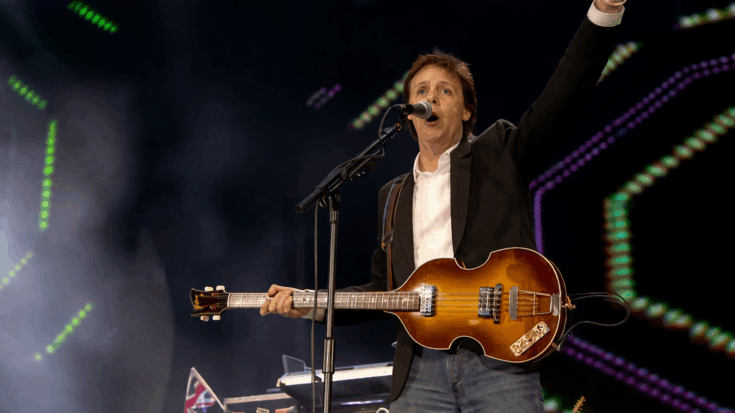
via "Live 8" / youtube
For Paul McCartney, the idea of stepping away from the stage has never quite taken hold. Even as debates continue about whether his voice retains the same strength it once had, those concerns dissolve the moment a stadium crowd erupts into “Hey Jude.” The shared experience between artist and audience remains the driving force behind his relentless touring schedule—one he seems determined to maintain for as long as physically possible.
A Performer Built for the Stage
McCartney’s connection to live performance stretches back to his earliest days with The Beatles. Even as the pressures of fame began to weigh heavily on the group, he was the last to suggest retiring from touring. Performing was never a burden for him—it was essential.
That instinct carried forward into his post-Beatles career with Wings, where he reaffirmed his place as a consummate live performer. The band’s Wings Over America stands as one of the defining concert albums of the 1970s, capturing the scale and energy McCartney consistently brought to the stage.
In more recent years, his shows have evolved into carefully curated retrospectives. By weaving Beatles classics with solo material, McCartney transforms each performance into both a personal showcase and a tribute. Songs like “Something” and “Here Today” honor his past, while hits such as “Let ’Em In” and “Silly Love Songs” reaffirm his enduring solo legacy.
Rejecting the Vegas Formula
Despite his openness to performing around the globe, McCartney has long drawn a line when it comes to Las Vegas residencies. While such engagements have become a prestigious and lucrative fixture for artists like Celine Dion, Katy Perry, and Def Leppard, the format has never appealed to him.
Part of that reluctance stems from his commitment to variety. McCartney has always resisted becoming a lounge-style performer, even when exploring softer material on Kisses on the Bottom. His concerts thrive on contrast—pairing the ferocity of “Helter Skelter” with the intimacy of “Yesterday.” A residency, by its nature, risks limiting that dynamism.
More bluntly, McCartney has expressed his disinterest in unmistakable terms:
“I do a solo segment in the middle of my shows at the moment and to do a whole show like that, I’m not sure I fancy it. It might be a little bit like too much hard work. As for playing Vegas, that’s something I’ve been trying to avoid my whole life. Definitely nothing attracts me about the idea. Vegas is where you go to die, isn’t it? It’s the elephant’s graveyard.”
A Legacy Meant for the World
McCartney’s skepticism toward Las Vegas is also shaped by history. The trajectory of Elvis Presley—whose later career became synonymous with Vegas residencies—serves as a cautionary example. While Presley delivered remarkable performances during that period, the confinement of a single venue stands in stark contrast to McCartney’s global outlook.
For McCartney, music has always been about movement—about reaching audiences wherever they are. The idea of settling into one location, no matter how prestigious or profitable, runs counter to that philosophy.
As long as he continues to take the stage, McCartney remains committed to the road rather than residency. His catalog, built across decades and continents, demands to be heard far beyond the walls of a single venue. And for an artist whose career has been defined by connection, the world—not Las Vegas—remains his true stage.