


The Massive Influence of The Beatles’ Rubber Soul — Still Felt Today
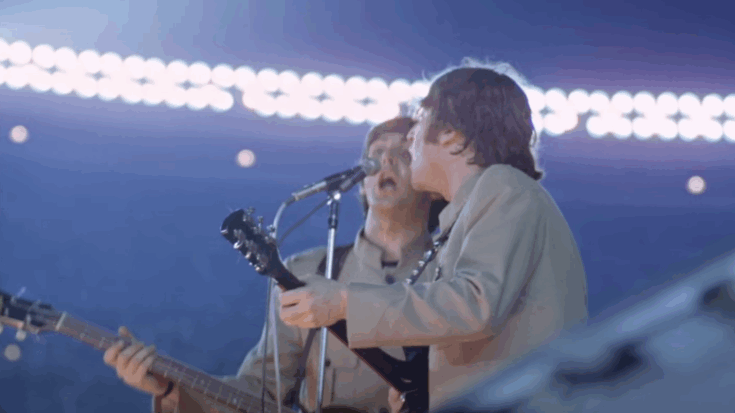
via The Beatles / youtube
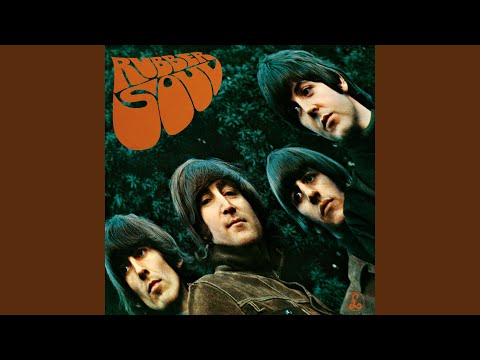
Some albums arrive quietly; others land like a tectonic shift. For the Beatles, Rubber Soul wasn’t just their sixth LP—it was the moment the most famous band in the world chose to reinvent itself in full view of the public, reshaping pop music in the process.
Released on Dec. 3, 1965, the record marked a distinct turning point. The youthful innocence of their early catalogue gave way to more introspective writing, more daring arrangements, and a musical confidence that had been steadily building since Help!. John Lennon summed it up bluntly that year: “You don’t know us now if you don’t know Rubber Soul.”
The album’s shift in tone was unmistakable. Paul McCartney reflected on the band’s evolution to Newsweek: “You can’t be singing 15-year-old songs at 20 because you don’t think 15-year-old thoughts at 20.” With its rich harmonies, adventurous instrumentation, and increasingly personal lyrics, Rubber Soul helped expand the very definition of what a pop album could be. George Harrison, whose songwriting was gaining new visibility, later called it his favorite Beatles record, saying, “Even at that time, I think that it was the best one we made.”
The album didn’t just change the Beatles—it changed the artists listening to them. Across genres and generations, musicians would point to Rubber Soul as the record that shifted their understanding of possibility.
Artists Who Were Transformed by Rubber Soul
Brian Wilson
The Beach Boys’ Brian Wilson famously said Pet Sounds would not have happened without the inspiration he drew from Rubber Soul. Even decades later, he still placed it above his own masterpiece: “I think the Beatles’ Rubber Soul is still the best album of all time.”
Elvis Costello
Hearing Rubber Soul at age eleven, Costello sensed immediately that something had changed. As he told Stereogum, “Rubber Soul was the first album I remember thinking, ‘This is something about a world I don’t know.’” Lennon’s darker narratives on songs like “Girl” and “Norwegian Wood” revealed a new emotional terrain.
Roger Daltrey
Released the same day as the Who’s debut, My Generation, Rubber Soul impressed Roger Daltrey from the start. In 2021, he recalled progressing from early blues and rock-and-roll to the more sophisticated approach the Beatles displayed here.
Grace Slick
Skeptical of the Beatles’ early teen-friendly image, Grace Slick said Rubber Soul was the first record that convinced her of their depth: “Until they came out with Rubber Soul, I thought they were silly.”
Art Garfunkel
Art Garfunkel remembered that it was Rubber Soul and Revolver that showed him and Paul Simon how an album could function as a cohesive artistic statement. “Once there was Rubber Soul and Revolver, I saw the model.”
Graham Nash
Graham Nash recognized the strength of George Harrison’s “If I Needed Someone” immediately, pushing the Hollies to record it. Although its release caused brief tension with Harrison, Nash’s instincts proved right—the single charted successfully.
Joni Mitchell
Joni Mitchell recalled playing Rubber Soul “over and over,” especially drawn to the acoustic intimacy of its songwriting. She even performed “Norwegian Wood” in Detroit clubs before launching her own career, saying she loved its “whimsical, charmingly wry quality.”
Bob Dylan
Not every reaction was positive. Dylan reportedly bristled at “Norwegian Wood,” feeling it borrowed from his stylistic approach. Lennon and McCartney never substantiated the claim, but the influence is hard to miss.
Andy Summers
Police guitarist Andy Summers struggled to choose between Rubber Soul and Revolver as his favorite rock LP, praising their restraint and power. By contrast, Sgt. Pepper, he said, felt excessive.
John Cale
John Cale cited “Norwegian Wood” among his top Beatles songs and credited Rubber Soul with pushing the Velvet Underground creatively. “It was rich in ideas, and I loved the way George managed to include all those Indian instruments.”
Andrew Loog Oldham
The Rolling Stones’ former manager, Andrew Loog Oldham, called Rubber Soul “the album that changed the musical world we lived in then to the one we still live in today.” The record’s title itself came from a critic’s jab describing Mick Jagger’s singing as “plastic soul.”
Ann Wilson
Heart’s Ann Wilson remembered buying the LP at a military-base PX store, describing it as “a moment… like holding a sacred object.” She played it until the grooves wore down.
Paul Stanley
Kiss frontman Paul Stanley praised its emotional clarity: “The Beatles’ Rubber Soul is so eloquent in its simplicity.”
Steven Tyler
Steven Tyler marveled at the Beatles’ rapid evolution, calling attention to how they leapt from “She Loves You” to the more psychedelic textures of Rubber Soul within two years. “’Norwegian Wood,’ how great is that?” he wrote.
Joe Perry
Joe Perry echoed Tyler’s awe, admitting he never realized how innovative the Beatles truly were: “Everything seemed to flow so naturally from them… You’d pick up Rubber Soul and it was fantastic.”
The Legacy That Keeps Widening
Nearly six decades after its release, Rubber Soul hasn’t lost any of its impact. It remains one of the rare albums that not only reflects a band in rapid artistic bloom but also becomes a catalyst for others to push themselves further. The record didn’t just redefine the Beatles’ trajectory—it reset the ambitions of an entire generation of musicians. And as new artists continue to discover its depth, the album’s influence shows no sign of fading; Rubber Soul still feels like the moment pop music realized it could grow up without losing its curiosity, courage, or soul.