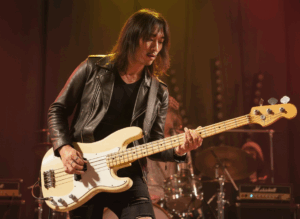
Tetsu Yamauchi, Influential Bassist for Free and Faces, Dead at 77
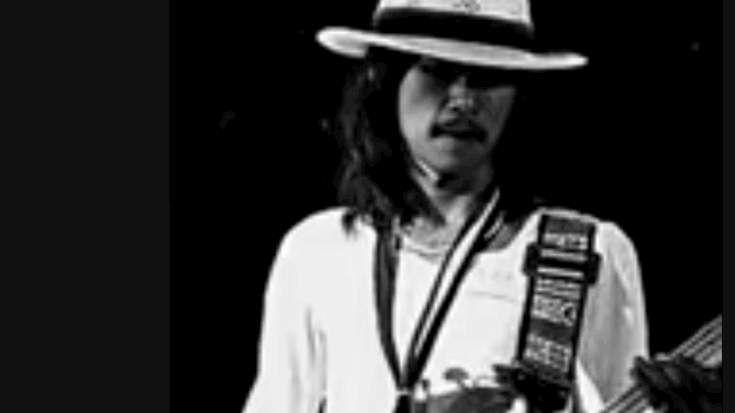
via @anton.guitarist / youtube
Tetsu Yamauchi, the versatile Japanese bassist whose career included pivotal roles in Free and the Faces, died on Dec. 4 at the age of 79.
His family confirmed his death in a statement on social media, noting that he “passed away peacefully, surrounded by family.” They expressed gratitude to fans who had supported him throughout his career:
“We sincerely thank everyone who enjoyed Tetsu’s music and offered kind words until now. Those were fun times. It’s a long time, but a short time.”
Born in Fukuoka, Japan, Yamauchi emerged on the music scene in the late 1960s with the progressive rock outfit Micky Curtis & the Samurais, a band that released two albums in 1971. His musicianship soon attracted attention abroad, leading to his recruitment by Free members Paul Kossoff, Simon Kirke, and John ‘Rabbit’ Bundrick for the collaborative LP Kossoff Kirke Tetsu Rabbit.
Joining Free During Turbulent Times
Yamauchi’s connection to Free deepened during a period of internal tension. The band was unraveling due to the ongoing conflict between bassist Andy Fraser and vocalist Paul Rodgers. After an unsuccessful attempt at reconciling in 1972, Free officially brought Yamauchi in to replace Fraser.
His contributions were immediate and impactful. Yamauchi played on Free’s final album, Heartbreaker, and co-wrote the enduring rock track “Wishing Well,” which remains one of the band’s signature songs.
A Complicated Chapter With the Faces
When Free dissolved for good in 1973, Yamauchi joined the Faces, stepping into the position left vacant by founding bassist Ronnie Lane. Although musically capable, the partnership proved uneasy. Keyboardist Ian McLagan later reflected, “We made a mistake really with Tetsu. It wasn’t his fault, but he was a party boy and thought he was in for lots of drinks and a little bit of playing, while we were looking for more creation and a lot less boozing.”
During his two-year run, Yamauchi played on the live album Coast to Coast: Overture and Beginners and appeared on the band’s final single, the famously long-titled “You Can Make Me Dance, Sing or Anything…”
After the Faces disbanded, Yamauchi shifted focus to solo work and session gigs before returning to Japan. There, he formed Tetsu Yamauchi & the Good Times Roll Band, releasing a live record in 1977. His later career included collaborations with jazz musicians and intermittent solo releases throughout the 1990s, after which he gradually stepped out of the public musical spotlight.
Remembering a Quiet but Influential Presence
On social media, drummer Simon Kirke remembered Yamauchi as “a good friend and a great bass player,” offering condolences to his family and “close friends.” But within musical circles, Yamauchi’s passing also sparked broader reflection on a career often overlooked outside dedicated fan communities.
Though he never sought fame and later chose a life far from the rock-and-roll limelight, Yamauchi’s fingerprints remain on some of the most compelling music of the early ’70s. His fluid, melodic bass lines helped steady bands in moments of upheaval, while his cross-cultural journey—from Japanese prog rock to British blues-rock institutions—quietly expanded the global footprint of the genre.
For many musicians, critics, and longtime listeners, his death marks not just the loss of a bassist but the passing of an artist whose understated presence helped shape the sound of an era.