




Stranger Things Brings a Legendary ’70s Cover Back to Life in Season 5
via Chinitameh
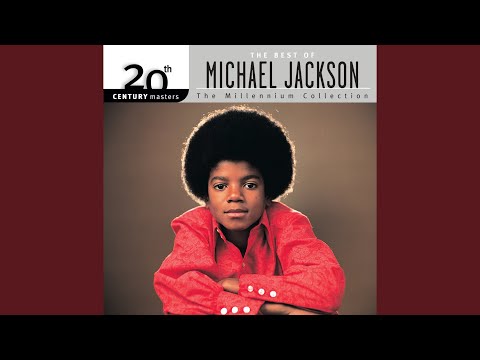
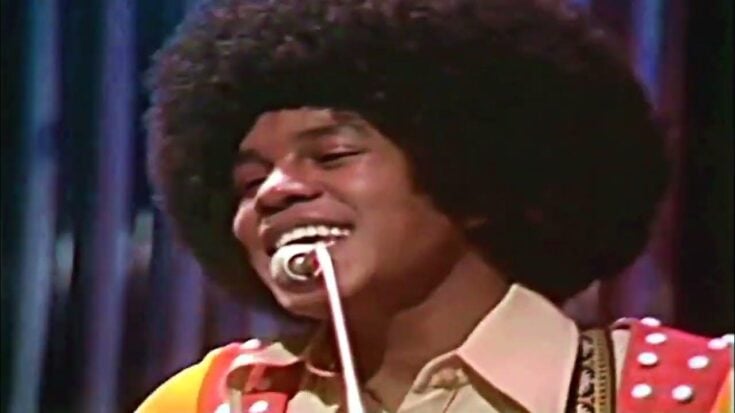
For viewers who never witnessed a young Michael Jackson cheerfully chirping “Tweedily-deedily-dee” in a song about a hyperactive bird, Stranger Things Season 5 is here to fill in the gap. After the massive cultural ripples created by Season 4’s use of Kate Bush’s “Running Up That Hill” and Metallica’s “Master of Puppets,” the series once again digs deep into the labyrinth of pop-culture memory. This time, it resurrects “Rockin’ Robin,” a track originally released in 1958, famously covered in 1972, used in a show set in the 1980s — and now enjoyed by audiences in 2025. Time collapse, courtesy of the Duffer Brothers.
“Rockin’ Robin” first appeared as a Bobby Day single during the height of Elvis Presley’s chart dominance. It spent 13 weeks on the Billboard Hot 100 and peaked at No. 2, just behind Tommy Edwards’ “It’s All in the Game.” Decades later, a 13-year-old Michael Jackson included a cover of the tune on his 1972 debut album Got to Be There. Why he chose it remains a mystery, though the playful animal sounds and buoyant chorus certainly suited his youthful persona. Jackson’s rendition kept the original blues progression intact, giving it a polished but unmistakably ’70s shimmer.
How Jackson’s Cover Fits Into Season 5
While the details of Season 5 are under tight wraps, Netflix’s official promotional material confirms that Jackson’s cover appears in Episode 1, alongside The Psychedelic Furs’ “Pretty in Pink,” Diana Ross’ “Upside Down,” and yet another reprise of Bush’s now-legendary anthem. In a three-minute preview clip, viewers see Robin — the sharp-witted, ice-cream-scooping fan favorite introduced in Season 3 and played by Maya Hawke — kicking off her new in-show radio broadcast.
She cues up the instantly recognizable intro: “Tweedily-deedily-dee, tweedily-deedily-dee.” Because her name is Robin. And she’s rockin’. “Get it?” the article quips. It’s one of those tongue-in-cheek moments the Duffers love, designed to charm fans without giving away the season’s bigger secrets.
As always, Stranger Things layers its supernatural storytelling with a meticulously curated soundtrack. Season 5 sprinkles in everything from The Chordettes’ “Mr. Sandman” to ABBA’s “Fernando” — and, in case anyone missed it the first dozen times, “Running Up That Hill” returns yet again, almost as a signature calling card of the show’s modern identity.
A Time-Bending Soundtrack, and a Legacy That Keeps Expanding
And while the article playfully notes that many actors now portraying Hawkins’ teens are well into their twenties — edging toward their thirties — it also reflects a deeper truth: Stranger Things has become a multigenerational bridge. Its music pulls audiences through decades of American pop culture, mixing eras freely and confidently, even when timelines don’t align with strict historical accuracy.
The writer points out that Michael Jackson himself crossed numerous musical eras. He turned 30 in 1988, just a year after releasing Bad — the album later spoofed by Weird Al Yankovic in “Fat.” Technically, songs from that era would be more chronologically appropriate for the show’s ’80s setting. But Stranger Things has never been concerned with airtight realism. It treats its soundtrack less as a timestamp and more as a storytelling tool, bending time to fit tone, character, and emotional resonance.
So when the series borrows a Jackson track from 1972 instead of 1987, it isn’t a mistake — it’s a deliberate nod to the way memory actually works. Nostalgia isn’t linear. It’s messy, layered, and sometimes delightfully anachronistic. By pulling from different decades, the show mirrors the nonlinear way fans relate to music: through family, radio, the internet, movies, games, and now, binge-worthy streaming.
In that sense, “Rockin’ Robin” is more than just a cheeky joke tied to a character’s name. It’s another entry in Stranger Things’ ongoing cultural mixtape — a reminder that the series is as much about the echoes of the past as it is about monsters, mysteries, and the ever-expanding mythos of Hawkins. If anything, its willingness to blur eras only strengthens its identity: a show that treats the entire history of pop music as fair game, as long as the needle drop hits emotionally, dramatically, or — in this case — just plain joyfully.