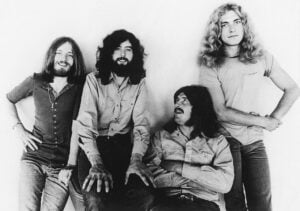





Honoring John Lodge: 4 Moody Blues Classics He Wrote and Sang

via John Lodge / Youtube
The Moody Blues occupy an essential place in rock history, and bassist John Lodge was a core part of what made the group endure. Lodge died on Oct. 10 at age 82, leaving behind a remarkable body of work created over more than sixty years. In addition to anchoring the band’s sound on bass, he wrote and sang several standout tracks. Here are four of his finest contributions—songs that fit comfortably on any playlist.
“Isn’t Life Strange” (1972)
The Moody Blues underwent a complete artistic transformation when Lodge and Justin Hayward joined in 1966. The group set aside its R&B beginnings and embraced ambitious original material that fused orchestral elements with rock arrangements. Because each member contributed as a songwriter, their albums carried a sense of variety and constant renewal. Lodge’s “Isn’t Life Strange” is one of the band’s strongest ballads, built around a gorgeous melody and lyrics that contemplate life’s unpredictability. The track highlights how the band created sweeping sonic landscapes from within their own ranks, powered here by Mike Pinder’s expressive keyboard work and Ray Thomas’ elegant flute lines.

“I’m Just a Singer (In a Rock and Roll Band)” (1973)
On 1973’s Seventh Sojourn, the Moody Blues aimed for a heavier, more driving sound, and Lodge delivered exactly that with the high-octane “I’m Just a Singer (In a Rock and Roll Band).” His rapid-fire vocal delivery almost sounds breathless, heightening the urgency of the song’s theme. Lyrically, Lodge acknowledges the chaos and troubles facing the world but also recognizes his limitations as a musician—he doesn’t claim to have all the answers simply because he’s in the spotlight. His bass line on the track is particularly memorable, anchoring the energetic arrangement.
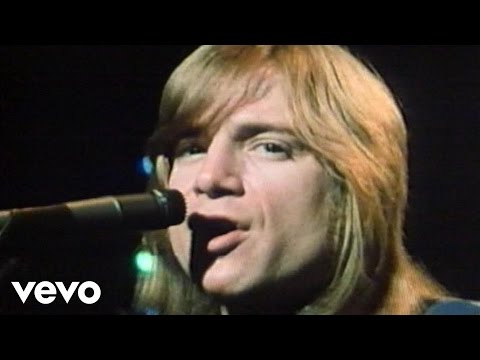
“Gemini Dream” (1981)
After a relatively quiet period in the late ’70s, during which the band largely sidestepped the disco wave, the Moody Blues returned in 1981 with Long Distance Voyager—an album that modernized their sound for the arena-rock era while preserving their trademark sense of wonder. “Gemini Dream,” cowritten by Lodge and Hayward (a rarity in a band where members typically wrote independently), captures the duality of a rock musician’s life: ordinary routines at home contrasted with the larger-than-life existence on the road. The song is an energetic standout and helped reassert the band’s relevance as the new decade began.

“Talking Out of Turn” (1981)
Long Distance Voyager also marked a shift in the group’s sonic identity with Patrick Moraz replacing longtime keyboardist Mike Pinder. On Lodge’s “Talking Out of Turn,” Moraz brings a fresh set of textures—sleek synth flourishes that complement the song’s sweeping, orchestral feel. Lodge’s melodic instincts are on full display once again, but it’s the emotional core of the track that lingers. The narrator regrets speaking impulsively and recognizes the damage his words caused. His remorse feels genuine, leaving listeners hopeful that forgiveness might follow.