




Gene Simmons Criticizes Radio Industry, Claiming Artists Are Treated “Worse Than Slaves”
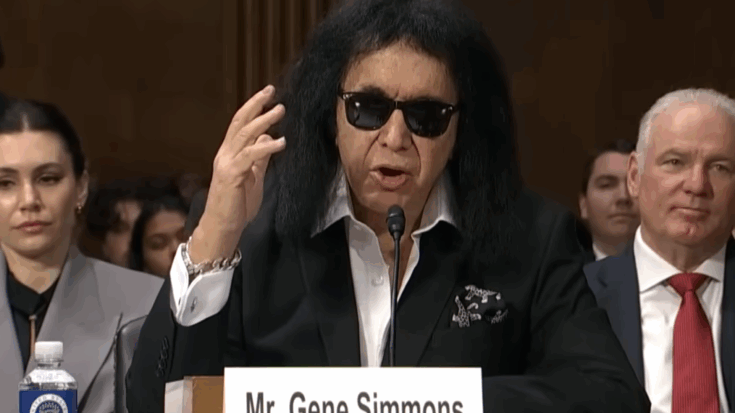
via CBS News / YouTube
Simmons Speaks Before Lawmakers
Kiss bassist Gene Simmons testified before a Senate Judiciary subcommittee and used strong language to describe how he believes radio treats working musicians. He argued that performers get nothing when their songs play on terrestrial radio, even when those recordings helped shape American culture.
“Let’s call it for what it is — an injustice that has been going on for decades,” Simmons said. He explained that performers who reach the top see no payment when radio uses their work. “When you work hard and you get to the top, what do you got? Zipperooney. That’s not the American way.” Simmons pointed out that while songwriters are paid, the people who sing and play on the recordings receive nothing.
The radio industry has long argued that airplay itself is enough reward because it promotes artists. But pressure has grown as satellite radio and streaming services adopted royalties for performers. Simmons said the divide shows how outdated the model has become. He suggested radio has relied on a system built before modern music platforms existed, even though the industry now competes in a digital world.
Support for the Music Fairness Act
Simmons came to Washington, D.C. to support the Music Fairness Act. The legislation would require radio stations to license songs for airplay and pay the performers involved. He said the bill is about fairness for artists who helped define America’s identity across generations.
“If you against this bill, you are un-American. You cannot let this injustice continue,” he declared. Simmons said the issue might seem small compared to global problems, but he argued that music represents the country. “It looks like a small issue. There are wars going on and everything. But our emissaries to the world are Elvis and Frank Sinatra, and when they find out that we are not treating our stars right — in other words, worse than slaves. Slaves get food and water. Elvis, Bing Crosby and Sinatra got nothing for their performance. We have got to change this now for our children and our children’s children.”
View this post on Instagram
Lawmakers and industry groups have clashed over the question for decades. Earlier attempts to change radio rules failed due to strong resistance from broadcasters. Opponents say the bill would hurt small stations already struggling against streaming, podcasts, and other media. They argue new fees could push many outlets out of business.
Debate Over Radio’s Future
Simmons believes the answer is clear. He described the current state as unfair and said Congress should update the law.
“This is an archaic injustice that’s been around for a long time, and there’s no reason why we shouldn’t get in the middle of it,” the bassist insisted. He urged members of both political parties to support the bill and said he hopes lawmakers see the value of the performers who shaped music history.
Watch the full hearing below: